

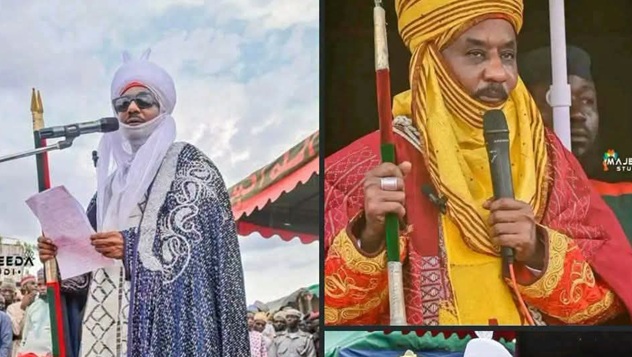
A viral social media post claiming that former Governor of the Central Bank of Nigeria, Muhammadu Sanusi II, condemned President Bola Ahmed Tinubu over alleged extravagant government spending has been found to be false.
The widely circulated statement alleged that Sanusi criticised the Tinubu administration for maintaining excessive government expenditure despite inheriting a struggling economy from former President Muhammadu Buhari. The quote referenced controversial government expenditures, including the reported N21 billion allocation for the vice president’s official residence and N70 billion spent on sport utility vehicles for members of the National Assembly.
However, independent fact-checks traced the statement to veteran Nigerian entertainer and social activist Charly Boy, who made the remarks in August 2024. There is no credible evidence that Sanusi made the viral statement.
The false attribution gained widespread attention partly because it reflected existing public debates over government spending, fiscal discipline, and economic hardship facing many Nigerians.
Although Sanusi has publicly expressed concerns about Nigeria’s economic management, including issues related to borrowing, public debt, and the need for structural reforms, he did not make the specific comments being shared online.
The controversy also comes against the backdrop of public criticism over government expenditure, including debates surrounding lawmakers’ vehicle purchases, infrastructure projects, and remuneration within the public sector.
Analysts note that falsely attributing statements to respected public figures can distort public discourse and mislead citizens, especially during periods of heightened political debate.
The spread of the fabricated quote highlights the growing challenge of misinformation on social media, where emotionally charged narratives often gain traction before their authenticity is verified.
Fact-checkers have urged Nigerians to verify the origin of viral claims before sharing them, particularly statements attributed to prominent political, religious, and traditional leaders.
The incident serves as another reminder of the importance of media literacy and responsible online engagement in an era where false information can spread rapidly and influence public perception.
As Nigeria approaches another major electoral cycle, observers warn that the circulation of unverified claims and fabricated quotations may increasingly shape political conversations, making independent verification more essential than ever.


