

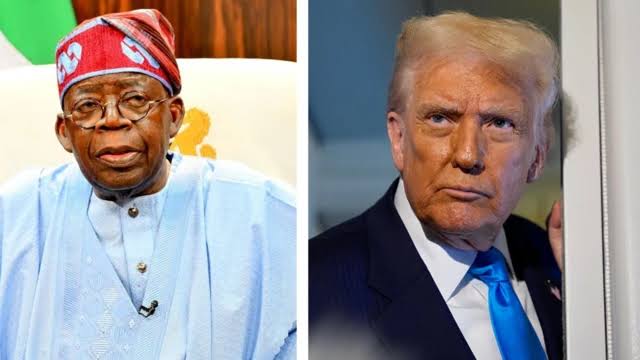
WASHINGTON/ABUJA — Fresh questions are being raised over why records concerning a long-running U.S. investigation involving Nigerian President Bola Ahmed Tinubu have not been fully released, despite a federal court ruling directing the FBI and Drug Enforcement Administration (DEA) to search for and process non-exempt records.
The controversy stems from a Freedom of Information Act (FOIA) lawsuit filed by transparency activist Aaron Greenspan seeking records relating to Tinubu and Abiodun Agbele in connection with a U.S. investigation into an alleged international drug-trafficking and money-laundering organisation in the early 1990s.
In an April 8, 2025 ruling, U.S. District Judge Beryl Howell rejected the FBI and DEA’s attempt to use the so-called “Glomar response” to neither confirm nor deny the existence of responsive records concerning Tinubu. The court concluded that the agencies had already officially acknowledged their involvement in investigations concerning Tinubu and ordered the FBI and DEA to search for and process non-exempt records.
That ruling, however, did not order the unconditional release of every document in the agencies’ possession. Records can still be withheld or redacted where legitimate FOIA exemptions apply.
Nevertheless, the pace of disclosure has generated renewed controversy.
A subsequent court filing showed that Tinubu’s lawyers sought an order confirming that the agencies could withhold or redact records identifying him under FOIA’s law-enforcement privacy exemption and the Privacy Act. The filing also indicated that the DEA had provided a response containing redactions and withholdings, while the FBI anticipated an interim response.
The case has therefore evolved from a dispute over whether the U.S. agencies could even acknowledge the existence of records into a broader fight over what those records contain and which portions can lawfully remain secret.
WHAT IS THE U.S. HIDING?
That question remains unanswered.
The underlying historical case involved U.S. authorities investigating an alleged Chicago-based heroin distribution and money-laundering network. Court records referenced in the FOIA litigation include a 1990s IRS affidavit concerning financial transactions and assets allegedly connected to individuals under investigation.
However, it is important to distinguish an investigation or civil forfeiture proceeding from a criminal conviction. Tinubu has not been criminally convicted in the United States of drug trafficking.
The central issue now is transparency: if the FBI and DEA possess records relating to the investigation, Nigerians and the wider public are entitled to ask why records that are not legally exempt have not been released promptly.
WHY THE SECRECY?
There are several possible explanations.
The agencies could be protecting legitimate law-enforcement information, confidential sources, investigative techniques or third-party privacy interests. FOIA permits withholding certain categories of information for precisely those reasons.
But secrecy becomes increasingly difficult to defend when a federal judge has already determined that the agencies cannot simply refuse to acknowledge the existence of the requested records.
The U.S. Department of Justice’s own summary of the judgment confirms that the court found the FBI and DEA’s Glomar responses concerning Tinubu could not stand and ordered the agencies to process non-exempt records.
That is why the continuing delay deserves scrutiny.
POLITICAL DIMENSION
The controversy has gained additional political significance because Tinubu is Nigeria’s sitting president and maintains an important relationship with Washington.
Critics argue that the American public—and Nigerians—deserve to know whether historical allegations involving a foreign head of state have any continuing investigative significance.
But claims that the U.S. government is deliberately protecting Tinubu, that intelligence agencies are concealing the files from President Donald Trump, or that Tinubu is being protected as an American “asset” remain allegations that have not been established by the available court record.
They should therefore not be reported as proven facts.
What can be established is more straightforward and arguably more troubling: a U.S. federal judge ruled that the FBI and DEA could no longer hide behind a blanket Glomar response, yet the release of responsive records has remained contested and incomplete.
The FBI itself says its FOIA system is designed to provide public access to records while allowing legally protected information to remain withheld.
THE QUESTION NOW
The most important question is no longer simply whether the FBI and DEA investigated Tinubu.
The court has already addressed the agencies’ ability to refuse to acknowledge those records.
The bigger question is:
If the records contain nothing capable of establishing wrongdoing, why not release every legally non-exempt page and allow the public to judge the evidence for itself?
Until that happens, the continued withholding of records will inevitably fuel speculation—particularly because the controversy concerns the integrity and past activities of the man currently occupying Nigeria’s highest political office.
Transparency, rather than political interpretation, remains the most effective way to settle the matter.
For now, the documents remain the missing piece of the puzzle.


