

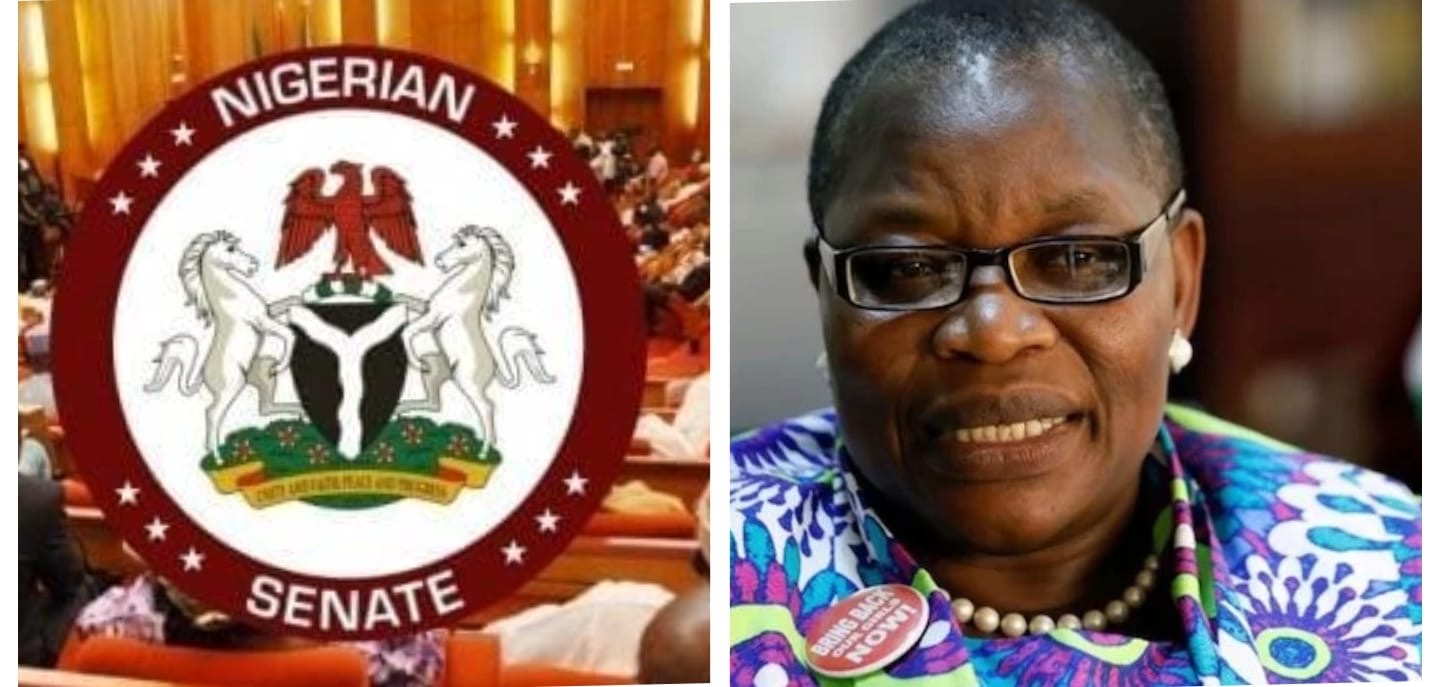
Former Minister of Education and public accountability advocate, Dr Obiageli “Oby” Ezekwesili, has called on the Nigerian Senate and House of Representatives to urgently reverse their stance on electronic transmission of election results, warning that continued legislative ambiguity could deepen public distrust and threaten national stability.
In a public memorandum released on Thursday, Ezekwesili criticised the Senate’s decision of 4 February 2026 to vote against a proposed amendment to the Electoral Act that would have made electronic transmission of results mandatory. She described the action as “grave irresponsibility,” arguing that it ignores the lessons of the 2023 general elections and risks reopening vulnerabilities that previously undermined public confidence in the electoral process.
Ezekwesili rejected the Senate’s claim that it did not oppose electronic transmission, stating that the lawmakers’ decision to retain the existing wording of Section 60(5) of the Electoral Act 2022 effectively preserves discretion for the Independent National Electoral Commission (INEC) over how and when results are transmitted. According to her, this discretionary language is the same provision that created uncertainty and controversy during the 2023 elections.
By failing to explicitly require real-time electronic transmission from polling units, Ezekwesili said the Senate had “weaponised ambiguity” in electoral law, leaving room for manipulation and unverifiable outcomes. She argued that optional or discretionary electronic transmission offers no meaningful safeguard against electoral malpractice in a system already weakened by historical distrust.
“The gap between what Nigerians were promised in 2023 and what the law ultimately allowed nearly pushed the country into turmoil,” she said, adding that retaining the same loophole after witnessing its consequences sends a troubling signal that transparency remains negotiable.
Ezekwesili dismissed arguments that mandatory electronic transmission would undermine INEC’s independence or operational flexibility, noting that strong democracies embed clarity and enforceability into their electoral frameworks to protect institutions from abuse, particularly by those in power.
She warned that while Nigeria survived the tensions of the 2023 elections, it did so largely due to public restraint rather than institutional strength. According to her, any future crisis arising from disputed elections conducted under the same discretionary framework would rest squarely with lawmakers who failed to act despite clear warning signs.
The former minister urged senators to cancel their announced two-week recess, reconvene in an open plenary session, and pass the proposed amendment in clear and unambiguous terms. She specifically called for the adoption of a provision requiring presiding officers to transmit polling unit results electronically and in real time to INEC’s Result Viewing Portal (IReV) after the relevant result forms have been duly signed and stamped.
Ezekwesili concluded by stressing that transparency remains the strongest safeguard for Nigeria’s democracy, warning lawmakers against actions that could inflame public anger and further erode trust in democratic institutions.
Dr Ezekwesili is a former World Bank Vice President, former Minister of Education and Solid Minerals, and the founder of the School of Politics, Policy and Governance (SPPG).


