

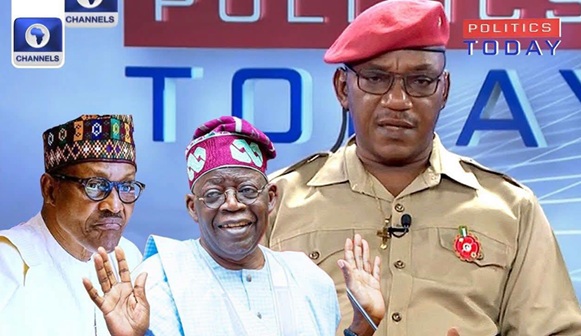
A former Minister of Youth and Sport has warned that one of the greatest threats to effective governance is not opposition criticism but the gradual isolation of leaders from honest advice, arguing that excessive praise and restricted access to presidents can undermine democratic accountability and national development.
In a statement issued following his appearance on Channels Television, Solomon Dalung said public attention had largely focused on his references to former President Muhammadu Buhari and President Bola Ahmed Tinubu. However, he stressed that the central message of his interview was the danger of leaders becoming disconnected from reality because those around them prioritise loyalty over truth.
Dalung explained that he had known both Buhari and Tinubu before they assumed the nation’s highest office, describing them as politicians who once challenged authority and attracted independent-minded associates. According to him, the transition from opposition figures to national leaders often changes the quality of information presidents receive.
He argued that presidents do not become detached from the realities facing citizens overnight but through a gradual process in which advisers and gatekeepers filter information, limit access and sideline voices willing to offer honest criticism.
“The most dangerous thing that can happen to a leader is not the opposition but the aimless applause of his supporters,” Dalung said, warning that governments begin to lose direction when leaders hear only favourable reports from those closest to them.
Reflecting on his time in government, Dalung recalled that former President Buhari had encouraged him to offer frank opinions rather than shield him from criticism. He said he maintained that approach both while serving in government and after leaving office.
According to Dalung, one of his final meetings with Buhari centred on the administration’s campaign promises. He said he asked the former president to identify which commitments had been fully delivered, adding that the discussion was intended to promote accountability rather than disrespect.
He further expressed concern over what he described as growing political trends in Nigeria, including the increasing influence of political endorsements over performance, the prioritisation of loyalty above competence and the erosion of conviction through political expediency.
Dalung also criticised the growing tendency of elected officials to make political decisions based on survival rather than public interest, warning that such developments weaken democratic institutions and reduce citizens’ confidence in governance.
He argued that democracy rarely collapses through a single dramatic event but rather through the gradual weakening of institutions, declining electoral credibility and the concentration of power in the hands of a few influential individuals.
Political analysts say Dalung’s remarks reflect broader debates about governance, institutional independence and internal accountability within democratic systems. They note that the relationship between political leaders and their advisers often influences the quality of decision-making and public policy.
Governance experts have consistently argued that administrations function more effectively when leaders receive diverse viewpoints and constructive criticism from advisers, public institutions and civil society. They maintain that strong institutions and transparent decision-making processes are essential for democratic stability.
Dalung concluded by urging political leaders and public office holders to value honest counsel above blind loyalty, competence above patronage and constitutional principles above political convenience. He expressed hope that Nigeria would strengthen its democratic institutions by encouraging accountability, openness and principled leadership.
His remarks have generated widespread discussion across political circles, with supporters describing them as a timely reflection on the challenges of governance, while others view the comments as part of the continuing national conversation on leadership, accountability and democratic reforms ahead of future elections.


