

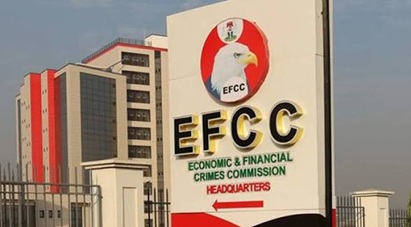
The Economic and Financial Crimes Commission has announced that whistleblowers who provide credible information leading to the recovery of Nigerian assets allegedly stolen and hidden abroad could receive between 2.5 per cent and 5 per cent of the value recovered.
EFCC Chairman, Ola Olukoyede, disclosed the incentive on Wednesday while delivering a lecture at the 43rd Cambridge International Symposium on Economic Crime in the United Kingdom. He urged individuals with credible intelligence about monetary and non-monetary assets taken out of Nigeria to come forward and assist the commission in tracing and recovering them.
Olukoyede said the financial reward was intended to encourage citizens and other individuals with useful information to cooperate with investigators, particularly in cases where stolen assets have been moved across international borders.
“If any of you is privy to where Nigerian assets are stolen or taken to anywhere in the world, we have an incentive for you,” the EFCC chairman said, explaining that between 2.5 per cent and 5 per cent could be paid to an eligible whistleblower after successful recovery.
The EFCC chief also emphasised the importance of protecting whistleblowers, arguing that people would be more willing to expose financial crimes if they were confident that their identities and safety would be adequately protected.
The reward structure is linked to Nigeria’s existing whistleblower policy rather than representing an entirely new anti-corruption framework. Reports indicate that the policy provides for varying percentages depending on the value of assets recovered.
Olukoyede’s announcement comes amid intensified efforts by Nigerian authorities to recover public assets allegedly acquired through corruption and moved to foreign jurisdictions.
According to the EFCC chairman, the commission has recovered and secured the forfeiture of cash and assets worth more than $500 million for the Federal Government within the past three years. He attributed the recoveries to investigations, judicial cooperation and access to credible intelligence.
He also highlighted the growing use of non-conviction-based asset forfeiture, a legal mechanism through which the EFCC can seek the forfeiture of assets suspected to be proceeds of crime without waiting for a criminal conviction.
Olukoyede cited several cases to demonstrate the commission’s recent asset-recovery efforts, including properties, an aircraft, estates and other assets allegedly linked to proceeds of crime.
Among the cases he referenced was the recovery of hundreds of housing units linked to former Central Bank Governor Godwin Emefiele. He also discussed investigations involving former Attorney-General of the Federation and Minister of Justice, Abubakar Malami.
According to Olukoyede, investigations into Malami resulted in the identification of 57 properties allegedly linked to him, with 48 already forfeited. The EFCC chairman said the commission was considering further legal action regarding the remaining properties.
The announcement comes against the backdrop of the growing international dimension of financial crime. Nigerian investigators increasingly have to work with foreign law-enforcement agencies, financial institutions and courts to trace assets allegedly transferred overseas.
Recovering such assets can be significantly more difficult than tracing funds within Nigeria because investigators may have to navigate different legal systems, banking regulations and evidentiary requirements.
The EFCC has therefore placed greater emphasis on international cooperation and intelligence gathering as part of its asset-recovery strategy.
Olukoyede’s appeal also places ordinary citizens at the centre of the anti-corruption campaign. Information from individuals familiar with suspicious transactions, properties or offshore holdings can provide investigators with leads that may otherwise be difficult to obtain.
However, the effectiveness of the incentive will depend on the credibility of the information supplied and the commission’s ability to protect whistleblowers from retaliation.
For Nigeria, the potential recovery of assets held abroad could provide significant financial benefits, particularly at a time when the country faces substantial development and fiscal pressures.
The EFCC’s latest initiative therefore represents an attempt to combine financial incentives, whistleblower protection, international cooperation and legal asset-forfeiture mechanisms in the fight against corruption.
As the commission intensifies its efforts to trace illicit wealth beyond Nigeria’s borders, Olukoyede’s message is clear: individuals with actionable information about stolen Nigerian assets abroad now have a direct financial incentive to help bring those assets back to the country.