

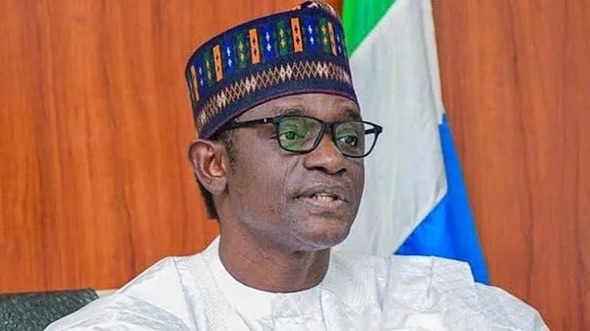
Yobe State Governor, Mai Mala Buni, has come under criticism following his pledge of N300 million towards the construction of a proposed university being established by the Jama’atu Izalatil Bid’ah Wa Iqamatis Sunnah, popularly known as JIBWIS.
The donation, announced at a JIBWIS national symposium in Jos, Plateau State, has triggered debate among residents and activists in Yobe, who questioned the priority of committing such a substantial amount to a religious university while the state continues to face challenges in education, healthcare and other basic services.
Critics argued that the N300 million could instead be channelled towards rehabilitating public schools, improving healthcare facilities and addressing other pressing needs affecting residents.
One of the critics, Umar Yobe, a member of the Peoples Democratic Party, alleged that the money was being provided from the public purse without consultation. Another activist, KY Tebo, drew attention to healthcare challenges in parts of the state, particularly the difficulties faced by residents requiring kidney treatment.
Tebo questioned the rationale behind the donation, arguing that the government should prioritise essential services that directly affect residents.
The education sector has also featured prominently in the criticism. Activist Adamu Bello Jana said many public schools in Yobe require urgent rehabilitation, while the state continues to contend with a significant out-of-school population.
According to the critics, the controversy is not necessarily about opposition to JIBWIS or the proposed university but about what they consider to be the appropriate priorities for a state government.
The criticism intensified on social media, with some residents describing the governor’s pledge as a misplaced priority and questioning the source of the funds.
However, the Yobe State Government has strongly rejected suggestions that the donation would be financed from state resources.
In a clarification issued by the Director-General, Press and Media Affairs to the governor, Mamman Mohammed, the government said the N300 million was a personal donation by Governor Buni and not a contribution from the Yobe State Government.
Mohammed explained that Buni attended the JIBWIS seminar in Jos alongside the governors of Kano, Sokoto and Jigawa states and other dignitaries.
According to the government, Special Adviser to the President on Political Affairs, Kabiru Masari, was the final speaker to deliver a goodwill message at the event. During his remarks, Masari announced a personal donation of N300 million and pledged an additional N300 million on behalf of Governor Buni.
The two pledges therefore amounted to N600 million.
The governor’s spokesman stressed that the donations were made in the individuals’ personal capacities and had no connection with the Yobe State Government.
He further argued that Masari had no authority to make financial commitments on behalf of the Yobe Government and described reports suggesting that state funds would be used to fulfil Buni’s pledge as false and misleading.
The controversy has nevertheless opened a broader discussion about the responsibilities of public officials when making large personal donations, particularly in states where citizens continue to demand greater investment in basic services.
While Buni is entitled to make personal charitable contributions, critics argue that the scale of the pledge naturally invites public scrutiny because of his position as governor and the economic challenges facing his constituents.
Supporters of the governor’s position, on the other hand, could argue that a personal donation to an educational institution does not necessarily conflict with government spending priorities, particularly where the contribution is not drawn from public funds.
The proposed JIBWIS university itself has attracted financial support from several political and religious figures. Other prominent donors and pledgers have previously contributed substantial sums towards the project, reflecting its growing profile among northern political and religious circles.
The dispute therefore goes beyond the N300 million pledge. It has become a debate over the intersection of personal philanthropy, public office and government accountability.
For Yobe residents, the immediate concern remains whether the state’s limited resources are being directed towards the areas where they are most urgently needed.
For Governor Buni, however, his administration’s position is that the controversial N300 million is his personal commitment and does not impose any financial obligation on the Yobe State treasury.
As the debate continues, the controversy is likely to keep attention focused on both the governor’s personal financial commitments and the wider question of how political leaders should balance private philanthropy with the expectations placed on them by the citizens they govern.