

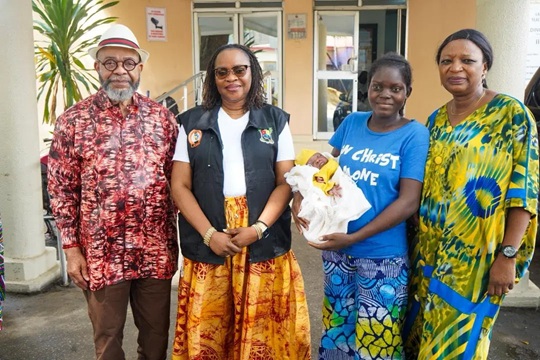
A five-month-old baby girl and her mother have been rescued from a canal at Abule-Ado along the Lagos-Badagry Expressway in Lagos State, in another incident highlighting the vulnerability of mothers and children living or seeking refuge in unsafe environments.
The rescue was carried out on Wednesday by operatives of the Lagos State Environmental Sanitation Corps, popularly known as KAI, during a routine clearance operation in the area. According to the agency, the operatives discovered the mother and her infant in the canal and immediately intervened because of concerns over their safety and wellbeing.
The spokesperson for the agency, Lukman Ajayi, said the five-month-old child was found in a poor state of health when the operatives arrived.
He explained that the mother was unable to give a satisfactory account of why she and her baby were staying in the canal. She reportedly told the officials that she was running away from her husband, who lived in FESTAC.
Ajayi said the operatives immediately removed both mother and child from the hazardous location and transported them to a nearby hospital, where they were taken for medical attention.
The rescue comes barely two weeks after KAI officials rescued four nursing mothers and their children from an illegal dumpsite along the same Lagos-Badagry Expressway.
The repeated incidents have raised concerns about the conditions confronting vulnerable women and children in parts of Lagos, particularly those who lack secure accommodation and access to basic social services.
In the earlier incident, the four nursing mothers were found at an illegal dumpsite in Agboju, where they had reportedly been living in an environment characterised by filth and poor sanitary conditions. One of the babies rescued at the time was only nine days old.
The latest rescue has consequently renewed calls for closer cooperation between environmental enforcement agencies, social welfare authorities, healthcare providers and community organisations to identify vulnerable families before they end up in dangerous locations.
While KAI’s intervention has prevented a potentially tragic outcome in the latest case, the circumstances surrounding the mother and child point to challenges that extend beyond environmental sanitation.
The mother’s claim that she was fleeing from her husband has also introduced a possible domestic or family-related dimension to the incident. However, authorities have not disclosed further details about the circumstances or whether any investigation into the claim has commenced.
The immediate priority, according to the sanitation agency, was ensuring the safety and health of the mother and her child.
The condition of the baby was particularly concerning, with officials confirming that she was not in good health at the time of the rescue. Medical treatment was therefore arranged immediately.
The Lagos-Badagry Expressway has now become the site of several recent interventions involving vulnerable mothers and children. The recurrence has prompted questions about whether some women and children are being forced into hazardous environments because of homelessness, poverty, domestic difficulties or the absence of adequate support networks.
For government agencies, the challenge is therefore not only to remove vulnerable people from unsafe locations but also to ensure that they have somewhere safe to go afterwards.
Social welfare intervention, temporary shelter, healthcare and child-protection services could be critical in preventing rescued families from returning to similarly dangerous environments.
The incident also highlights the importance of timely intervention by members of the public. Residents who encounter vulnerable people living in canals, dumpsites or other hazardous areas can potentially help by alerting the relevant authorities before a situation becomes life-threatening.
For now, both mother and daughter have been moved to a hospital, where the infant is receiving medical attention.
The rescue provides a measure of relief, but it also serves as a stark reminder that behind Lagos’ rapid urban development are vulnerable families whose struggles can sometimes push them into environments posing serious risks to their health and survival.