

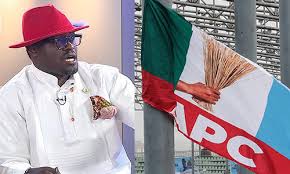
A political dispute has erupted within Nigeria’s ruling All Progressives Congress (APC) after aggrieved aspirant Farah Dagogo reportedly dragged the party to court over alleged exclusion and political injustice.
Dagogo, who is said to be dissatisfied with developments within the party’s internal political process, accused the APC of sidelining him despite allegedly investing over N100 million in his political ambition and activities linked to the party structure.
The legal action is already generating political attention, with observers viewing the development as another sign of growing internal tensions and power struggles ahead of future political contests.
Dagogo Challenges Alleged Exclusion
According to reports surrounding the case, Farah Dagogo claimed he was unfairly treated despite his financial commitment and loyalty to the party.
The politician reportedly argued that after spending substantial resources in support of his political aspiration and mobilization efforts, the party could not simply abandon or exclude him from the process.
The matter has now been taken before the court, where Dagogo is expected to seek legal redress regarding his grievances against the APC.
Legal and political analysts say the case could attract wider attention depending on the issues raised, particularly if it involves allegations relating to internal democracy, candidate selection, or political agreements within the party.
Internal Party Tensions Resurface
The dispute highlights recurring tensions within major political parties in Nigeria, where aspirants and party stakeholders frequently clash over primaries, nominations, zoning arrangements, and leadership decisions.
Political observers note that internal disagreements often intensify ahead of election cycles as politicians position themselves for strategic appointments and elective offices.
In recent years, several aggrieved aspirants across different parties have resorted to litigation after claiming unfair treatment or manipulation during party processes.
Analysts say such disputes sometimes weaken party unity and can influence electoral outcomes if not properly managed.
Financial Cost of Nigerian Politics
Dagogo’s claim that he spent over N100 million also reignites public debate about the high financial cost of politics in Nigeria.
Many political analysts argue that the country’s electoral environment has become increasingly expensive, with aspirants often investing heavily in consultations, mobilization, publicity, logistics, and internal party engagements.
Critics say the rising cost of political participation discourages grassroots candidates and strengthens the influence of wealthy political actors within party structures.
There have also been repeated calls for stronger reforms to reduce monetization in Nigerian politics and improve transparency in candidate selection processes.
Legal Battle Could Shape Political Alignments
Observers believe the court case could have implications for political alliances and internal power dynamics within the All Progressives Congress depending on how the matter develops.
Political insiders suggest that unresolved disputes within party ranks can sometimes trigger defections, factional disagreements, or parallel political structures.
While the APC has yet to publicly respond in detail to the allegations, party leaders are expected to closely monitor the situation to prevent further escalation.
Concerns Over Internal Democracy
The dispute has also revived discussions around internal democracy in Nigerian political parties.
Civil society groups and election observers have repeatedly urged political parties to strengthen transparency, fairness, and accountability during primaries and candidate selection processes.
According to political analysts, internal democracy remains one of the biggest challenges affecting party stability and public trust in Nigeria’s political system.
They argue that disputes arising from perceived exclusion or manipulation often damage the credibility of political institutions and weaken democratic participation.
Public Reactions and Political Debate
The development has sparked mixed reactions among political supporters and commentators online.
Some sympathized with Dagogo’s frustration, arguing that aspirants who invest heavily in party activities deserve fair treatment and inclusion.
Others, however, criticized the culture of excessive political spending, saying democracy should not be treated as an investment expecting guaranteed returns.
The controversy has further fueled broader conversations about money politics, loyalty, and power negotiations within Nigeria’s major political parties.
Looking Ahead
As the legal proceedings unfold, attention will focus on how both the court and party leadership respond to the allegations raised by Farah Dagogo.
Political analysts say the outcome could influence future conversations around party discipline, aspirant rights, and internal political accountability within the APC and beyond.
With political activities already intensifying across the country ahead of future elections, disputes such as this are expected to remain a major feature of Nigeria’s evolving democratic landscape.


