

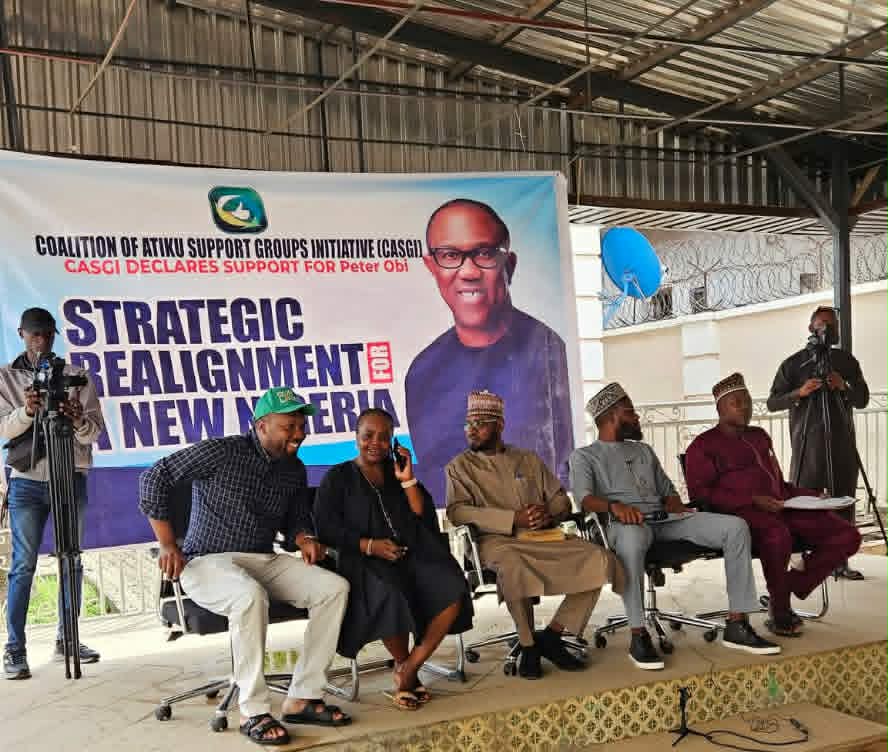
A coalition of political groups loyal to former Vice President Atiku Abubakar has declared support for Peter Obi in a move that could further reshape Nigeria’s opposition political landscape ahead of future elections.
The group, known as the Coalition of Atiku Abubakar Support Groups Initiative (CASGI), announced its endorsement during a meeting of members and stakeholders, citing the need for unity among opposition forces and a collective effort to address Nigeria’s mounting economic and governance challenges.
Leaders of the coalition stated that their decision was driven by what they described as Obi’s leadership qualities, reform-oriented agenda, and growing appeal among Nigerians seeking political change. They argued that the country requires a broad-based alliance capable of transcending party and regional divisions.
Speaking on behalf of the coalition, representatives of CASGI said Nigeria’s current realities demand collaboration among opposition figures rather than fragmentation. They emphasized that the endorsement should be viewed as part of a wider movement toward building a stronger democratic alternative.
The declaration comes amid ongoing political realignments involving major opposition actors across the country. In recent months, speculations about alliances, defections, and coalition-building have intensified, particularly around figures such as Obi, Atiku, and former Kano State governor Rabiu Kwankwaso.
Political analysts believe the endorsement could signal deeper negotiations within opposition circles ahead of future electoral contests. While Atiku himself has not publicly commented on the coalition’s declaration, observers note that support groups often play influential roles in shaping grassroots mobilization and political narratives.
Supporters of the move argue that a united opposition front could strengthen democratic competition and provide Nigerians with a more coordinated alternative platform. They maintain that repeated divisions among opposition parties have historically weakened their electoral prospects.
However, some critics view the endorsement cautiously, pointing out that support group declarations do not always translate into formal political alliances or official endorsements by principal actors. Others argue that ideological differences and leadership ambitions among opposition figures could still complicate efforts at coalition-building.
Despite these uncertainties, the announcement has generated significant discussion within political circles, especially among supporters of Obi and Atiku who see the development as a possible sign of growing cooperation.
As Nigeria’s political environment continues to evolve, attention is likely to focus on whether such endorsements will lead to concrete political arrangements or remain symbolic gestures of solidarity among opposition stakeholders.


