

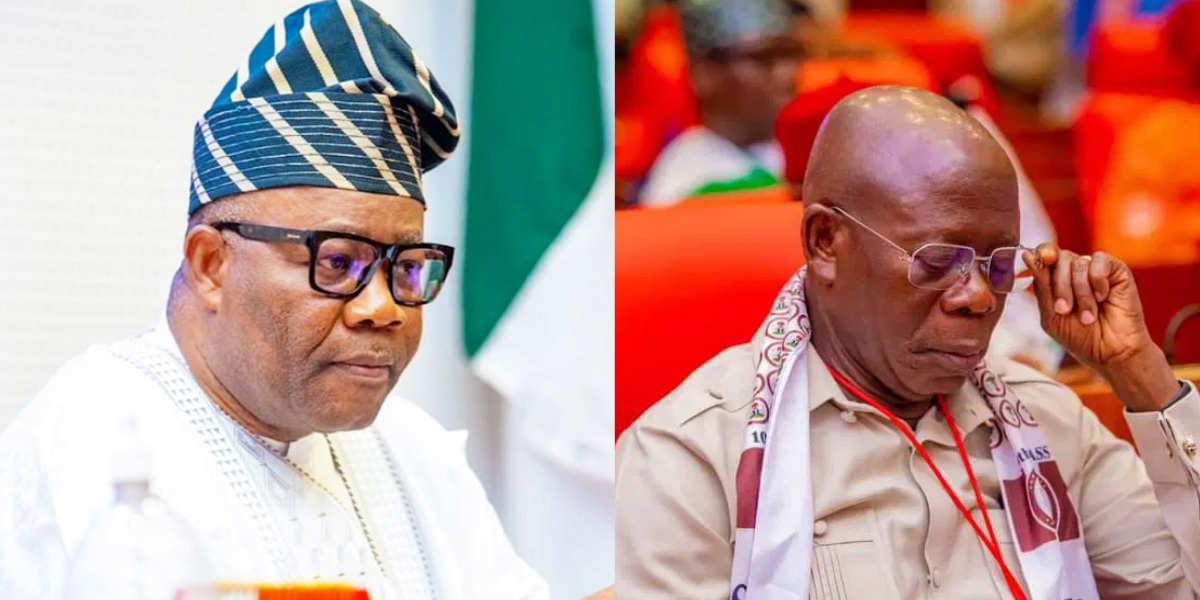
Former Edo State governor and senator, Adams Oshiomhole, has called for the resignation of Senate President Godswill Akpabio following controversy surrounding recently amended Senate leadership rules that were later reversed.
The dispute began on May 5, 2026, when the Nigerian Senate reportedly amended its standing rules to require lawmakers seeking top leadership positions—such as Senate President—to have served two consecutive terms in the Senate. Political observers noted that the amendment appeared to favor incumbents within the current 10th Assembly and potentially shape the contest for leadership positions ahead of 2027.
However, just two days later, the Senate rescinded the amendment after concerns emerged over its constitutional validity and political implications. The reversal was led by Senate Leader Opeyemi Bamidele, who moved the motion to withdraw the controversial provision.
Reacting to the development, Oshiomhole argued that if the scrapped rule had been allowed to stand, Akpabio himself would not have qualified under its conditions. According to him, Akpabio served one term during the 8th Senate, was absent during the 9th Senate after joining the executive arm of government, and only returned in the current 10th Assembly.
Oshiomhole maintained that Akpabio should resign “to lead by example,” insisting that lawmakers must avoid promoting standards that appear selective or self-serving. He described the episode as one that raises questions about fairness, consistency, and the integrity of legislative processes.
The controversy has reignited discussions over succession politics and internal rivalries within the All Progressives Congress (APC), particularly as political calculations ahead of the 2027 elections begin to intensify. Analysts say the short-lived amendment exposed underlying tensions among senators positioning themselves for future leadership contests.
Critics of the proposed rule argued that requiring consecutive terms could unfairly exclude experienced lawmakers who left the Senate for executive appointments or other public service roles before returning to legislative politics. Others, however, defended the proposal as an attempt to ensure continuity and institutional experience in Senate leadership.
While Akpabio has not publicly responded to Oshiomhole’s demand, the issue has sparked heated debate within political circles and on social media, with supporters and critics offering contrasting interpretations of the Senate’s actions.
Observers believe the controversy may have lasting political consequences within the ruling party, as lawmakers and stakeholders continue to maneuver for influence ahead of the next electoral cycle. For now, the reversal of the amendment may have resolved the immediate legal concerns, but it has also opened fresh debates about transparency, power dynamics, and leadership ambitions within Nigeria’s upper legislative chamber.


