

Chasing shadows will not solve Nigeria’s deepening political tensions, nor will selective accountability restore public confidence in the nation’s security institutions. The recent arrest of a school teacher over alleged threats against former presidential candidate Peter Obi has once again raised concerns about uneven enforcement of the law. While no individual should be shielded from investigation where credible evidence exists, justice must not stop at the doorstep of the powerless. It must extend boldly and transparently to those in high office if democracy is to retain its meaning.
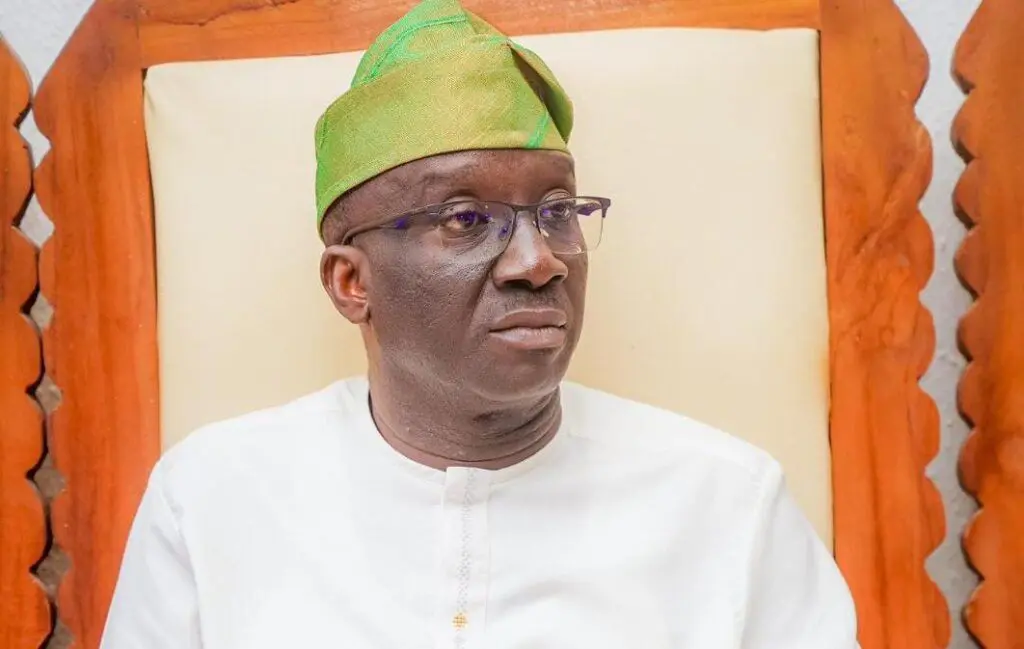
The controversy has been further intensified by widely circulated remarks attributed to the Governor of Edo State, Monday Okpebolo. According to reports and viral footage, the governor allegedly declared: “The man wey say he no get shishi, I am sending a direct message to him, there is a new sheriff in town. He cannot come to Edo State without telling me because his security will not be guaranteed. Whatever happens to him in Edo State, he will take it. I am serious about this.” Such statements, if accurately reported and left unclarified, naturally provoke public concern, especially in a tense political environment where rhetoric can easily be interpreted as a threat.
Public office holders wield enormous influence, and their words carry consequences beyond political banter. When a sitting governor publicly suggests that the security of a prominent opposition figure cannot be guaranteed within his state unless certain conditions are met, it raises serious constitutional and security questions. Nigeria operates under a federal system where freedom of movement is guaranteed, and no elected official should appear to condition that right on personal approval. At the very least, such remarks deserve formal scrutiny and clarification.
The Department of State Services (DSS) exists to safeguard national security and prevent threats to public order. However, national security enforcement must not appear selective. If a school teacher can be arrested over alleged threats, then consistency demands that powerful political figures whose statements may be construed as threatening should also be invited for questioning. This is not about presuming guilt; it is about ensuring that investigations are thorough, balanced, and credible.
Democracy thrives on accountability. Inviting a sitting governor for questioning where credible allegations exist would not diminish the office; rather, it would strengthen institutional trust and demonstrate that no one is above the law. In fact, submitting to lawful investigation can serve as an opportunity for clarification and exoneration where misunderstandings exist.
Ultimately, Nigerians are watching closely. The perception that security agencies pursue the less powerful while avoiding scrutiny of influential figures erodes confidence in the system. To avoid the accusation of “chasing shadows,” the DSS must ensure that all relevant actors connected to alleged threats or hostile rhetoric are examined transparently. The investigation must be conducted openly, and its findings made public. Only then can the rule of law be seen to operate without fear or favor, reinforcing the democratic principle that justice applies equally to teachers and governors alike.