

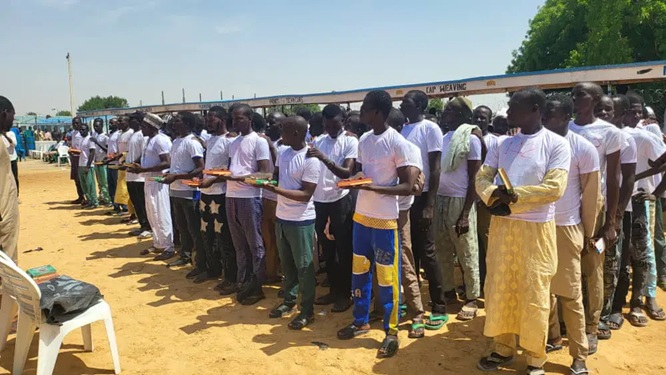
The Borno State Government has reintegrated 720 repentant insurgents into their communities after they successfully completed a deradicalisation, rehabilitation, and reintegration programme under the state’s non-kinetic counter-insurgency strategy.
The beneficiaries, described as low-risk and minor clients under Batch 9 of the programme, were formally released during a ceremony held at the Hajj Camp in Maiduguri. The exercise also included 992 spouses and 2,050 children associated with the former insurgents, who were reunited with their communities after undergoing various rehabilitation processes.
Speaking at the event, the Special Adviser on Security to Governor Babagana Umara Zulum, Brigadier General Abdullahi Ishaq (retd.), described the programme as a major milestone in Borno State’s efforts to combat insurgency through peaceful and community-based approaches. He said the initiative demonstrates the state’s commitment to complementing military operations with rehabilitation and reconciliation measures.
According to him, the programme began in July 2021 after communities across Borno agreed to forgive and accept former insurgents who voluntarily surrendered and renounced violence. He noted that the state’s rehabilitation model has since become one of the most prominent non-kinetic approaches to counter-terrorism in the region.
The official disclosed that more than 350,000 individuals, including former fighters, women, and children linked to insurgent groups, have voluntarily exited the bush and surrendered to security forces since the initiative commenced. With the latest batch of 720 former insurgents, the total number of reintegrated beneficiaries under the programme has risen to 9,680.
Authorities explained that participants undergo extensive screening, deradicalisation, vocational training, psychological support, and rehabilitation before being considered for reintegration. As part of the process, beneficiaries are also required to take an oath on the Holy Quran affirming their commitment to peace and renunciation of violence before returning to society.
Supporters of the programme argue that it provides a pathway for reconciliation, reduces the number of active insurgents, and promotes long-term peace in communities devastated by years of conflict. They contend that military action alone cannot completely resolve insurgency without addressing the social and economic factors that sustain it.
However, the initiative continues to attract criticism from some victims of insurgency and sections of the public who question the reintegration of former fighters while many communities are still recovering from the effects of terrorist attacks. Critics have called for greater support for victims and stronger monitoring mechanisms to ensure that rehabilitated individuals do not return to violent activities.
Despite the controversy, Borno State officials insist that the programme remains an important component of the broader strategy to end insurgency in the North-East. They maintain that all participants undergo rigorous assessment before release and that community leaders, security agencies, and government institutions remain actively involved in monitoring their reintegration.
The latest reintegration exercise comes as authorities continue to balance military operations against insurgent groups with efforts aimed at promoting reconciliation, rehabilitation, and sustainable peace across conflict-affected communities in Borno State and the wider North-East region.


