

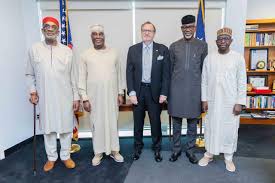
Former Vice President Atiku Abubakar has outlined a stark agenda for his upcoming engagement with policy and institutional stakeholders in the United States, declaring that Nigeria’s worsening security, governance, and economic crises will take center stage in his discussions abroad.
In a statement issued by his media adviser, Paul Ibe, Atiku described Nigeria as facing a “full-blown internal crisis” that can no longer be minimized or politicized. He cited rampant violence in the North-West and North-East, ongoing bloodshed in the Middle Belt, and the alarming spread of kidnappings and criminality nationwide as evidence that the Nigerian state is “steadily losing its grip on its most fundamental responsibility: the protection of lives and property.”
Atiku argued that these are not isolated incidents but signs of systemic failure, with communities overrun, livelihoods destroyed, and citizens left to fend for themselves. “Any government that cannot guarantee basic security forfeits the moral basis of its mandate,” he stated, warning that the stakes for national stability have never been higher.
On the economy, Atiku highlighted severe and avoidable hardship facing millions of Nigerians, pointing to soaring inflation, a weakened naira, and collapsing purchasing power. He criticized policy inconsistency and a lack of strategic direction, saying these factors continue to erode public confidence and push more citizens into distress.
He also raised alarm over the declining strength of Nigeria’s democratic institutions, arguing that waning public trust in governance, accountability, and the electoral process poses a direct threat to unity and stability. “Any attempt to undermine transparency or manipulate outcomes will carry serious consequences for both unity and legitimacy as another election cycle approaches,” Atiku cautioned.
Anticipating criticism of his international outreach, Atiku was unequivocal: “Telling the truth about Nigeria is not unpatriotic.” He rejected accusations of inviting foreign interference, noting that Nigeria’s failures have global repercussions and that the world is already watching. He insisted that responsible leadership welcomes scrutiny as a path to improvement.
Addressing the current administration, Atiku warned against complacency and deflection, stating that “power is not an entitlement but a responsibility,” and that Nigerians expect action, not explanations. He called for urgent government action to restore public confidence and implement a credible strategy for tackling insecurity and economic decline.
To Nigerians, Atiku delivered a blunt message: “No nation survives in silence.” He urged citizens to remain vigilant and engaged, emphasizing that real change will come from within. “Nigeria stands at a critical juncture. The choice is between confronting hard truths now or drifting further into instability,” he concluded.
Atiku’s US visit is expected to attract wide attention, with observers watching closely for the reception of his frank assessment and the impact of his advocacy on Nigeria’s international standing and domestic policy debates.


