

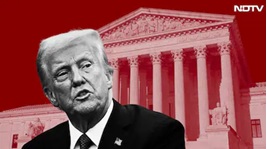
The Supreme Court of the United States has upheld the constitutional principle of birthright citizenship, delivering a major setback to President Donald Trump by striking down his executive order that sought to restrict automatic citizenship for certain children born in the United States.
In a 6–3 decision, the Court ruled that the Citizenship Clause of the Fourteenth Amendment guarantees U.S. citizenship to nearly all individuals born on American soil, regardless of whether their parents are undocumented immigrants or are in the country temporarily. Chief Justice John Roberts, writing for the majority, reaffirmed the Court’s long-standing interpretation of the Constitution and relied on the landmark 1898 precedent in United States v. Wong Kim Ark.
Trump’s executive order, issued shortly after returning to office, sought to deny automatic citizenship to children born in the U.S. whose parents were neither U.S. citizens nor lawful permanent residents. The policy never took effect after being blocked by lower federal courts pending judicial review.
The ruling means that birthright citizenship remains intact under the Constitution, with the Court concluding that such a fundamental change cannot be made through executive action alone. Legal experts say any effort to alter the constitutional guarantee would require a constitutional amendment rather than a presidential order.
The decision represents one of the most consequential immigration rulings in recent years and is widely viewed as a significant rebuke of a central pillar of the Trump administration’s immigration agenda. The administration has indicated it will explore legislative options, while supporters of birthright citizenship hailed the judgment as a reaffirmation of constitutional protections.
The case drew national attention because of its potential impact on hundreds of thousands of children born annually in the United States and its broader implications for immigration policy, constitutional interpretation, and presidential authority.


