

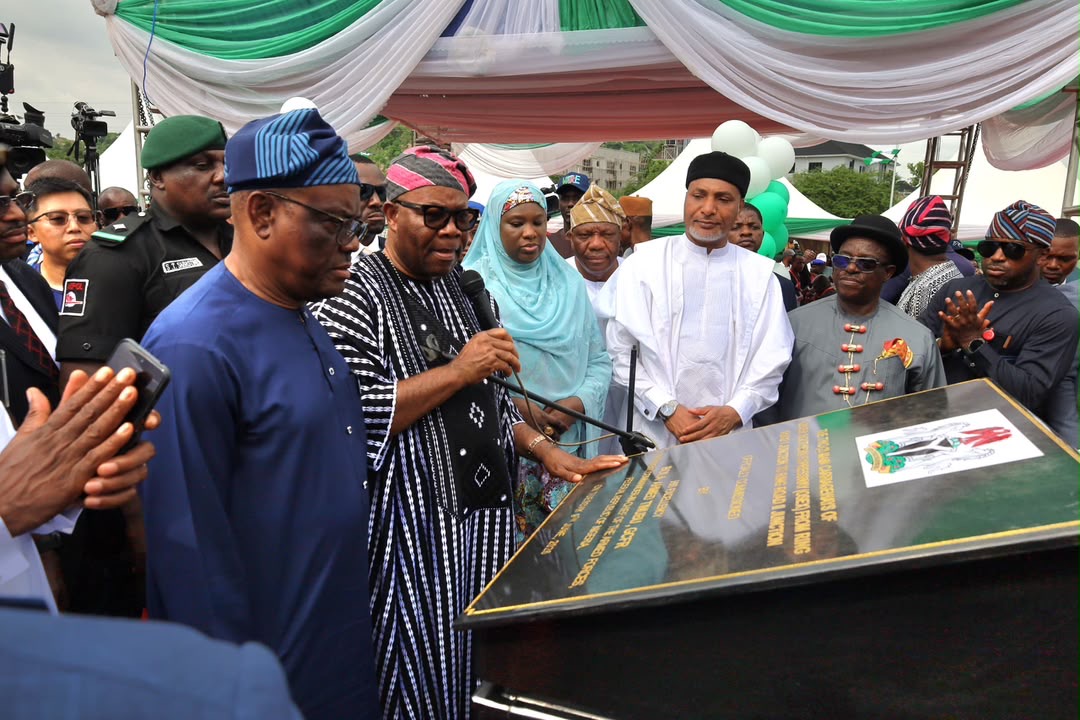
The Minister of the Federal Capital Territory (FCT), Nyesom Wike, has stated that a significant proportion of ongoing infrastructure projects being executed under President Bola Tinubu’s administration were initiated by previous governments.
Wike made the remarks while speaking on project implementation and continuity in Nigeria’s public infrastructure development, noting that about 80 percent of projects currently being completed were inherited from past administrations.
The comment has sparked renewed debate over government accountability, project ownership, and the continuity of development plans across successive administrations in Nigeria.
Wike Highlights Project Continuity in Governance
According to the FCT Minister, it is a common practice in governance for new administrations to inherit and complete projects initiated by their predecessors.
He explained that infrastructure development is often a long-term process that spans multiple political administrations due to funding cycles, planning stages, and execution timelines.
Wike emphasized that completing inherited projects should not be viewed negatively, but rather as part of responsible governance and efficient use of public resources.
He argued that abandoning ongoing projects each time a new government comes into office leads to waste of public funds and slows down national development.
Debate Over Credit for Infrastructure Projects
The minister’s remarks have triggered discussion among political analysts and citizens over how credit for infrastructure projects should be attributed.
While some observers agree that continuity is essential for effective governance, others argue that governments should clearly distinguish between new projects and inherited ones to ensure transparency and accountability.
The debate is particularly significant in Nigeria, where successive administrations often claim credit for infrastructure achievements, even when such projects were initiated by previous governments.
Analysts say clearer documentation and public communication about project timelines could help address misunderstandings and improve trust in government reporting.
Infrastructure Development Across Nigeria
Nigeria continues to face significant infrastructure challenges, including road construction, transportation systems, housing, and public utilities.
Successive governments have launched various initiatives aimed at improving infrastructure across the country, but project completion rates have often been affected by funding constraints, policy changes, and administrative transitions.
The FCT, in particular, has witnessed a series of ongoing road construction and urban development projects aimed at improving mobility and expanding the city’s infrastructure network.
Wike has consistently maintained that his administration is focused on completing abandoned and ongoing projects while also initiating new developments where necessary.
Importance of Project Completion
Experts in public administration argue that completing inherited projects is critical for ensuring efficient use of public funds.
They note that abandoned projects often lead to wasted resources, increased costs, and reduced public confidence in government institutions.
According to development analysts, continuity in infrastructure planning allows governments to maximize previous investments while reducing duplication of efforts.
They also stress that citizens are more concerned about project completion and functionality than political ownership of such projects.
Calls for Transparency in Government Reporting
The remarks have also renewed calls for greater transparency in how governments report project achievements.
Civil society organizations have urged authorities to clearly indicate which projects are newly initiated and which are inherited from previous administrations.
They argue that such clarity would help improve accountability and allow citizens to better evaluate the performance of government officials.
Transparency advocates also believe that accurate reporting can reduce political tension and improve public trust in governance.
Political Reactions and Implications
Wike’s statement has generated mixed reactions among political observers and stakeholders.
Supporters of the minister argue that his comments reflect the realities of governance, where development is often continuous rather than segmented by political terms.
Critics, however, believe that the statement raises questions about how governments communicate their achievements to the public.
The discussion comes amid ongoing debates over infrastructure development and project execution under the current administration.


