
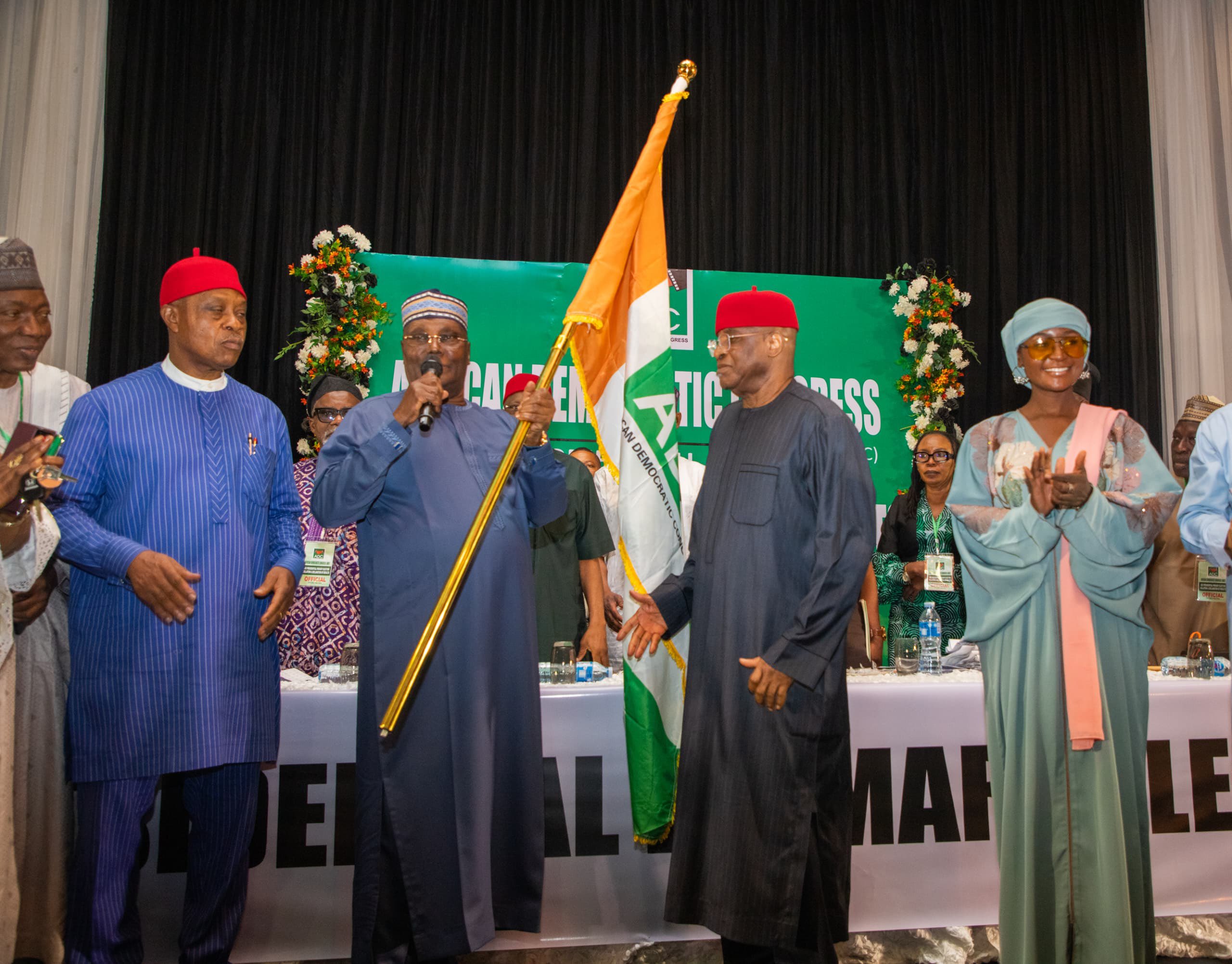
Former Vice President Atiku Abubakar has once again demonstrated his dominance in intra-party politics after emerging victorious in the controversial African Democratic Congress (ADC) presidential primary election held ahead of the 2027 general election. However, the exercise has already plunged the party into a fresh legitimacy crisis following widespread allegations of vote manipulation, delegate compromise, and procedural irregularities raised by rival aspirants and their supporters.
The primary election, which was expected to showcase the ADC as a credible alternative opposition platform, instead exposed deep cracks within the coalition that had recently attracted several high-profile political figures from across Nigeria’s opposition landscape.
Atiku’s Familiar Strength in Primaries
Political analysts have long acknowledged Atiku Abubakar as one of the most formidable presidential primary contestants in modern Nigerian politics. Over the years, he has consistently demonstrated a remarkable ability to build internal party structures, negotiate elite alliances, mobilize delegates, and secure presidential tickets across different political parties.
From the Peoples Democratic Party (PDP) to coalition alignments and now the ADC, Atiku has repeatedly shown that he understands the arithmetic and political bargaining required to win party primaries. His influence within delegate systems and elite negotiations has often given him a strategic advantage over rivals.
However, critics argue that while Atiku remains highly effective at winning internal party contests, translating those victories into nationwide electoral success has remained his greatest political challenge. Despite several presidential bids stretching over decades, he has not secured victory in a general presidential election.
This recurring pattern has become a major talking point among opposition stakeholders who fear that the ADC may have repeated what they describe as an “old political cycle” rather than projecting a fresh electoral alternative capable of energizing undecided voters ahead of 2027.
Allegations of Vote Rigging and Delegate Manipulation
Shortly after the results were announced, serious allegations emerged from rival camps.
Former Minister of Transportation, Rotimi Amaechi, openly rejected the outcome, describing the exercise as compromised and inconsistent with democratic standards earlier promised by the party leadership. According to his camp, there were widespread reports of inflated vote figures, delegate intimidation, and irregular accreditation procedures in several states.
Supporters of former banker and economist Mohammed Hayatu-Deen also accused party officials of manipulating the process in favour of Atiku. Hayatu-Deen reportedly declined to participate in aspects of the final collation process, citing concerns over transparency and fairness.
Sources within the party alleged that disagreements began even before voting commenced, particularly regarding the composition of delegate lists, accreditation procedures, and the influence of powerful political blocs that recently joined the ADC coalition.
Observers say the scale of the controversy has damaged the image the ADC initially attempted to build as a reform-oriented opposition movement capable of avoiding the internal crises that weakened older political parties.
Internal Crisis Threatens ADC Coalition
The aftermath of the primary has intensified fears of possible defections, litigations, and factional disputes within the ADC.
Several party stakeholders are reportedly worried that aggrieved aspirants and their supporters may either challenge the process in court or quietly withdraw support from the party ahead of the general election.
The crisis is particularly sensitive because the ADC had recently experienced major leadership disputes involving legacy state executives and coalition figures struggling for control of the party structure. The emergence of Atiku through a disputed primary may further deepen existing mistrust between old party loyalists and newly arrived political heavyweights.
Political commentators warn that opposition coalitions in Nigeria have historically struggled to survive after contentious primaries, especially when defeated aspirants believe the process was manipulated against them.
Wider Political Implications Ahead of 2027
The controversy surrounding the ADC primary is expected to reshape opposition politics in the coming months.
For supporters of alternative opposition platforms such as the Nigeria Democratic Congress (NDC), the ADC crisis is already being presented as evidence that some opposition coalitions merely reproduced the same political culture Nigerians had hoped to escape.
Analysts also believe the development may influence undecided politicians still weighing their political futures ahead of the 2027 elections. Many aspirants are closely watching how the ADC leadership handles reconciliation efforts in the coming weeks.
If unresolved, the internal crisis could weaken the ADC’s national momentum and create opportunities for rival opposition parties seeking to attract dissatisfied stakeholders and grassroots supporters.
Meanwhile, Atiku’s emergence once again places him at the center of Nigeria’s opposition politics — admired by supporters for his political resilience and criticized by opponents who argue that repeated primary victories have not translated into broad national electoral success.
Atiku Clinches ADC Presidential Ticket Amid Rigging Allegations by Amaechi, Hayatu-Deen

- Advertisement -

