

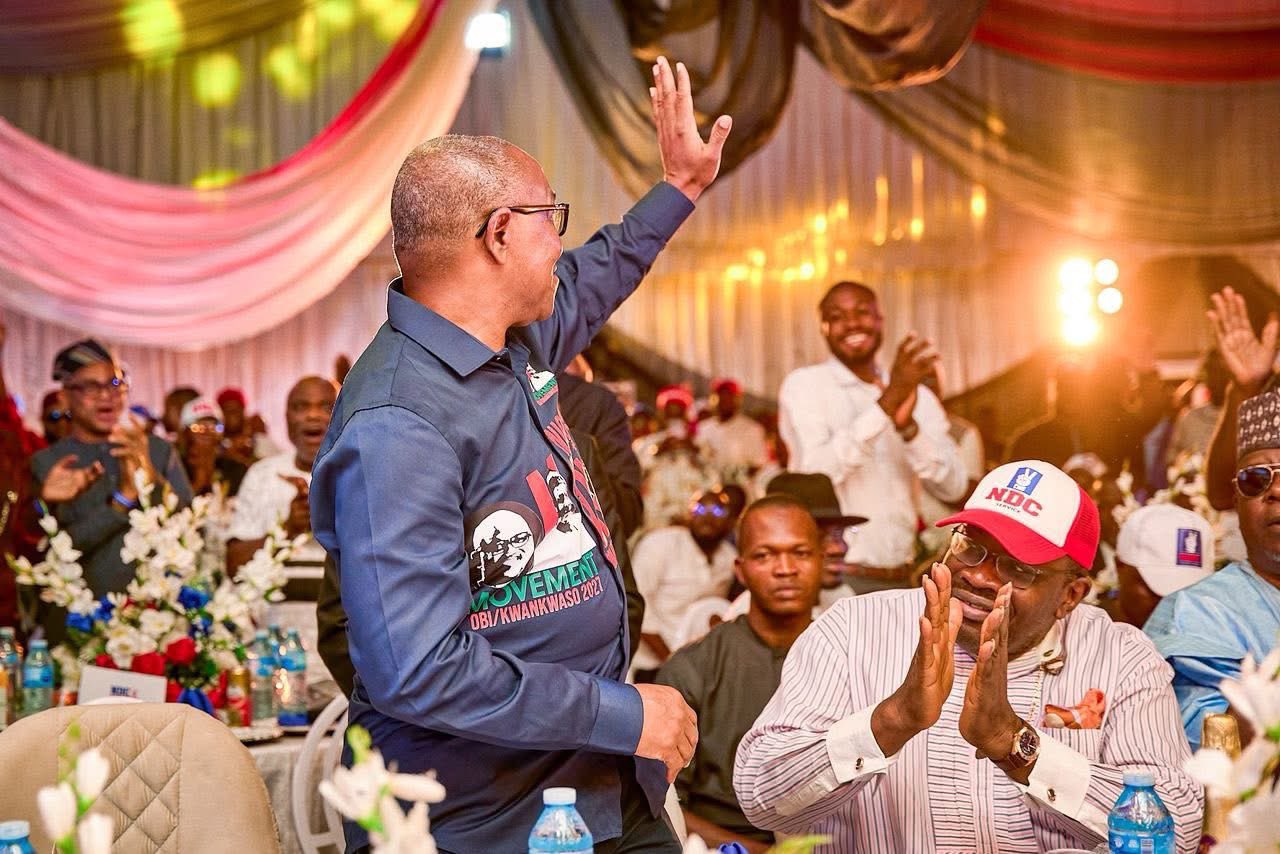
The Nigeria Democratic Congress (NDC) has dismissed online claims suggesting that prominent politicians who recently defected from the African Democratic Congress (ADC) are regretting their decision to leave the party.
The controversy follows the high-profile movement of several opposition figures to the NDC roughly three weeks ago, including former Labour Party presidential candidate Peter Obi, former Kano State governor Rabiu Musa Kwankwaso, Senator Victor Umeh, and more than a dozen members of the House of Representatives.
The defectors had cited internal leadership disputes, legal uncertainties, and growing instability within the ADC as reasons for their departure.
On Monday, fresh social media claims emerged alleging that some of the politicians were already dissatisfied with their move to the NDC.
However, no verified evidence or official statements from the defectors supported the reports.
Supporters and officials of the NDC quickly dismissed the claims as political propaganda intended to weaken morale within the party and create the impression of instability ahead of the 2027 elections.
Party insiders argued that the NDC remains active and energized following the defections, pointing to ongoing committee inaugurations, membership mobilization drives, and preparations for party primaries.
The party has also reportedly extended deadlines for aspirant submissions and screening processes as it moves to comply with the Independent National Electoral Commission’s timetable ahead of the May 30 primary deadline.
Political observers say the online exchanges reflect escalating tensions between opposition parties competing to attract influential politicians and grassroots supporters ahead of 2027.
The defections to the NDC significantly altered the opposition landscape, particularly because of Obi’s strong youth support base and Kwankwaso’s influence in northern Nigeria through the Kwankwasiyya movement.
Analysts note that the emergence of the NDC has intensified competition within opposition politics, especially among parties seeking to position themselves as the strongest alternative to the ruling All Progressives Congress (APC).
Meanwhile, APC officials have continued to highlight the divisions and internal disputes within opposition parties as evidence that the ruling party remains more stable and organized ahead of the next election cycle.
Political analysts believe that coalition-building, defections, and party restructuring will continue shaping Nigeria’s political environment over the coming months as preparations for the 2027 general elections accelerate.


