

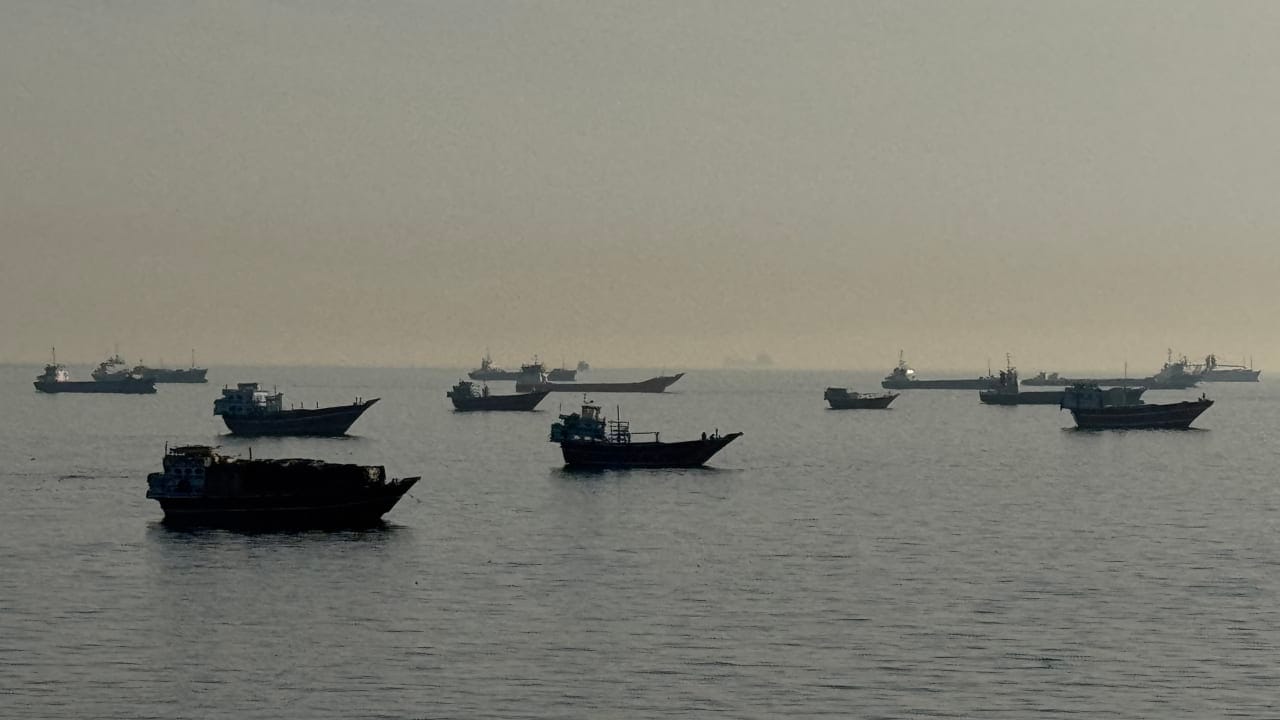
In an era of fast-moving political commentary, it has become increasingly common to encounter sweeping claims about global leaders “starting wars” and later “making deals” to undo the consequences. Yet international crises—especially those involving the Middle East and strategic waterways like the Strait of Hormuz—rarely follow such neat storytelling.
The recent claim that former U.S. President Donald Trump “started a war only to later agree on a deal to reopen the Strait of Hormuz, which was previously open and free,” reflects a broader problem in global political discourse: the replacement of complex geopolitical reality with emotionally charged simplifications.
The Strait of Hormuz, one of the world’s most critical oil chokepoints, has remained open throughout modern history, even during periods of severe tension between Iran, the United States, and their regional allies. What has occurred over the years is not closure and reopening, but rather cycles of threats, sanctions, naval confrontations, tanker seizures, and diplomatic brinkmanship. These are serious events, but they do not amount to a formal shutdown of the waterway followed by a negotiated reopening agreement.
During the Trump administration, U.S.–Iran relations did indeed deteriorate significantly. The withdrawal from the Iran nuclear agreement, the imposition of “maximum pressure” sanctions, and the escalation of military tensions—including the killing of Iranian General Qassem Soleimani—marked a sharp shift in policy. However, despite the intensity of these events, there was no declared war between the two countries, nor a formal peace treaty centered on reopening the Strait of Hormuz.
This distinction matters. In geopolitics, language is not decoration—it is definition. Mislabeling tension as war, or strategic maritime risk as closure, risks distorting public understanding of how international security actually functions.
The deeper question raised—whether diplomatic agreements serve the people of Iran, the United States, or broader global interests—is far more substantial. In reality, most international agreements are neither purely altruistic nor entirely self-serving. They are negotiated outcomes shaped by competing national interests:
States seek security, leverage, and economic advantage.
Governments respond to domestic political pressures.
Populations, often indirectly, bear the consequences of both confrontation and compromise.
For ordinary citizens, especially in energy-dependent economies, stability in the Strait of Hormuz is not abstract. It affects fuel prices, inflation, shipping costs, and global supply chains. For Iranians, Americans, and much of the world, escalation carries real economic and human costs, while de-escalation offers partial relief—even if it does not resolve underlying political disputes.
The danger in today’s discourse is not disagreement over foreign policy. That is expected. The danger lies in reducing complex geopolitical dynamics into moral absolutes or inaccurate historical claims. Such framing may be emotionally satisfying, but it weakens public understanding and makes constructive debate harder.
If there is a lesson in the recurring tensions around Iran, the United States, and the Gulf, it is this: stability is rarely achieved through dramatic “wins” or symbolic “deals,” but through slow, imperfect, and often frustrating diplomacy that does not always make headlines.
And in that sense, the real question is not whether one leader “made a deal with the devil,” but whether global actors are willing to engage honestly with complexity rather than replacing it with convenient narratives.


