

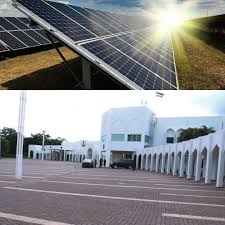
The installation of large-scale solar carports at Nigeria’s Presidential Villa has triggered nationwide debate, as citizens question the optics of energy self-sufficiency at the seat of power while millions continue to grapple with persistent electricity shortages.
The project, reportedly valued at ₦17 billion and spread across the 2025 and 2026 budgets, is designed to make the Aso Rock Presidential Villa energy-independent and significantly reduce its reliance on the national grid. Officials say the move could also cut an estimated ₦47 billion annual electricity expenditure tied to powering the complex.
Supporters of the initiative argue that it reflects a forward-looking embrace of renewable energy and aligns with global trends toward sustainability. They note that similar solar systems have been installed in high-level government facilities abroad, including the White House, and that Nigeria’s growing private-sector adoption of solar power demonstrates its practicality.
However, critics have sharply questioned the timing and symbolism of the project. Prominent voices such as Dino Melaye and activist NEFERTITI have described the development as contradictory, pointing to President Bola Tinubu’s earlier campaign promises to deliver stable electricity nationwide.
Nigeria’s power sector continues to struggle, with generation levels hovering between 4,000 and 4,500 megawatts for a population of over 200 million people. Frequent grid collapses, aging infrastructure, and mounting sector debts have compounded the crisis, leaving households and businesses reliant on expensive alternatives such as generators and private solar systems.
For many Nigerians, the idea of the Presidential Villa achieving uninterrupted power through solar while the rest of the country faces outages has intensified frustrations. “It raises a fundamental question about priorities,” one analyst observed. “If renewable solutions are viable, why not scale them nationally?”
Others, however, argue that the project could serve as a model for broader adoption, demonstrating the feasibility of decentralized energy systems in a country with abundant sunlight.
Energy experts note that while solar installations can significantly reduce dependence on the grid, scaling such solutions across Nigeria would require substantial investment, policy consistency, and infrastructure upgrades.
The controversy also highlights a broader policy dilemma: balancing immediate solutions for critical institutions with long-term reforms needed to stabilize the national grid.
As debates continue, the solar project at Aso Rock has become more than an infrastructure story—it is now a symbol of the wider challenges facing Nigeria’s energy sector and the expectations placed on leadership to deliver sustainable and inclusive solutions.
Whether viewed as innovation or irony, the development has reignited urgent conversations about how Nigeria can move from isolated success stories to a comprehensive and reliable national power system.


