
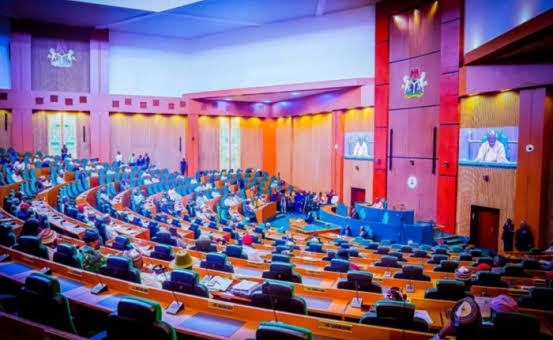
The approval of President Bola Ahmed Tinubu’s fresh $516 million loan request by the House of Representatives has once again brought to the fore growing concerns over the weakening role of opposition lawmakers in Nigeria’s Green Chamber.
At a time Nigerians expected a stronger and more assertive National Assembly capable of providing checks and balances, the swift approval of another major borrowing request has reinforced fears that the legislature has become a mere extension of the executive arm—an institution many critics now describe as operating in a dangerous “rubber stamp” era.
With the increasing wave of defections and political realignments ahead of the 2027 general elections, many had hoped that the National Assembly would witness a rebirth of active opposition politics. Instead, what is being seen appears to be a continuation of partisan survival rather than genuine legislative resistance.
Observers argue that opposition in parliament is not merely about changing party affiliations from APC to ADC, PDP to APC, or joining new coalitions. The real test lies in responsible parliamentary engagement—scrutinizing executive requests, demanding accountability, defending public interest, and ensuring that government borrowing directly translates into visible national development.
The recent loan approval raises a fundamental question: where exactly is the opposition in the House of Representatives?
The members of the opposition at the National Assembly must rise beyond press statements and symbolic affiliations. They should ask tough questions, demand accountability from President Tinubu and the APC-led government, and insist on transparency in every request brought before parliament.
They must challenge excessive borrowing, demand full disclosure on how previous loans were utilized, and ensure that every kobo approved serves the Nigerian people rather than political interests.
In functional democracies, opposition lawmakers are expected to interrogate loan requests, demand transparency on previous borrowings, insist on measurable outcomes, and protect citizens from reckless fiscal decisions that mortgage the future of generations unborn.
In Nigeria, however, such resistance appears increasingly absent. Instead, legislative proceedings often end in rapid endorsements, minimal debate, and overwhelming compliance with executive demands.
This development has deepened concerns about what many now call the “Tinubunization” of Nigerian governance and institutions—a growing culture where dissent is weakened, independent institutions are gradually neutralized, and democratic accountability is sacrificed for political convenience.
Political analysts warn that the danger is not just in the approval of a single $516 million request, but in the normalization of legislative surrender. When lawmakers abandon their constitutional responsibility of oversight, democracy itself becomes endangered.
The National Assembly was designed to serve as a check on executive excesses, not as a ceremonial approval chamber for presidential requests.
The increasing decamping of lawmakers has further complicated the situation. While defections are often presented as strategic political moves, critics insist that party migration without ideological conviction means little to ordinary Nigerians.
What citizens seek is not movement between party platforms, but visible and measurable opposition—lawmakers who can stand firm, ask difficult questions, expose wasteful governance, and protect national interest above personal ambition.
There is a growing call for a new political consciousness within the legislature—one rooted in national renewal, moral courage, and institutional responsibility.
Beyond changing party logos, Nigeria urgently needs a rebirth of principle-driven opposition politics.
Without that, the Green Chamber risks losing not only its credibility but also its constitutional relevance in safeguarding democracy.
Reps’ Approval of Tinubu’s $516m Loan Request Raises Questions on Opposition’s Role in the Green Chamber

- Advertisement -

