

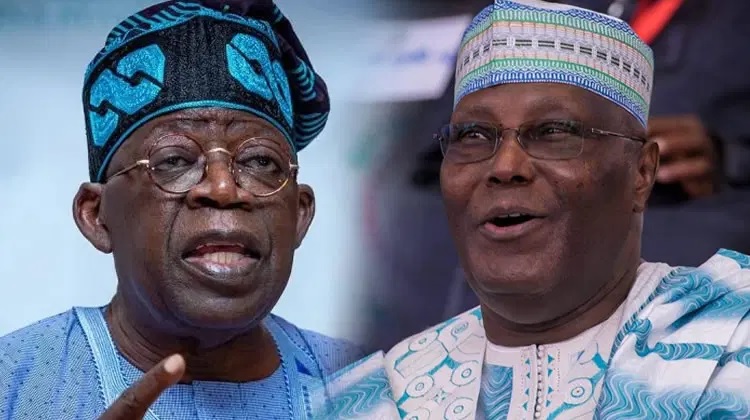
Former Vice-President Atiku Abubakar has expressed strong concern over President Bola Tinubu’s request for Senate approval of a fresh $516 million external loan intended to finance parts of the ambitious Sokoto–Badagry Superhighway project.
In a statement that has sparked renewed debate over Nigeria’s growing debt profile, Atiku questioned both the timing and necessity of the proposed borrowing, warning that the country must tread carefully to avoid deepening its fiscal vulnerabilities.
The loan request, currently before the Nigerian Senate, forms part of the Federal Government’s broader infrastructure financing strategy. The Sokoto–Badagry Superhighway, a major transnational corridor, is designed to connect Nigeria’s northwest to its southwestern coastline, boosting trade, mobility, and economic integration across multiple states.
However, Atiku argued that while infrastructure development is essential, it must not come at the cost of unsustainable debt accumulation. He called for greater transparency in the terms of the loan, including interest rates, repayment structure, and the overall cost-benefit analysis of the project.
“Nigeria must prioritize fiscal responsibility,” he reportedly stated, emphasizing that borrowing should be tied to clear economic returns and efficient project execution.
The former vice-president’s concerns reflect a broader national conversation about public debt management. In recent years, Nigeria’s debt stock has risen significantly, driven by efforts to fund infrastructure, stabilize the economy, and address budget deficits. Critics warn that continued reliance on external borrowing could strain future revenues and limit fiscal flexibility.
Supporters of the Tinubu administration, however, defend the loan request as a necessary step toward addressing Nigeria’s infrastructure deficit. They argue that projects like the Sokoto–Badagry Superhighway have the potential to unlock economic growth, create jobs, and enhance regional connectivity.
Government officials have also maintained that external loans often come with more favorable terms compared to domestic borrowing, making them a viable option for financing large-scale projects.
Economic analysts remain divided. Some agree with Atiku’s caution, noting that without strict oversight, borrowed funds can be mismanaged or fail to deliver expected returns. Others point out that strategic infrastructure investment, if properly executed, can generate long-term economic benefits that outweigh the initial debt burden.
The Sokoto–Badagry Superhighway itself is seen as a transformative project, expected to span several states and facilitate the movement of goods and services across Nigeria. Proponents say it could significantly reduce transportation costs and improve access to markets, particularly for agricultural and industrial sectors.
Nevertheless, concerns persist about project execution, funding transparency, and the capacity of government institutions to manage such large-scale investments effectively.
As the Senate deliberates on the loan request, all eyes will be on lawmakers to scrutinize the proposal and ensure that it aligns with national economic priorities. Public opinion is also expected to play a role, with citizens increasingly demanding accountability in government spending.
For now, Atiku’s intervention has added a critical voice to the discussion, highlighting the delicate balance between development needs and fiscal sustainability. The outcome of the Senate’s decision could have lasting implications for Nigeria’s economic trajectory and its approach to infrastructure financing in the years ahead.


