

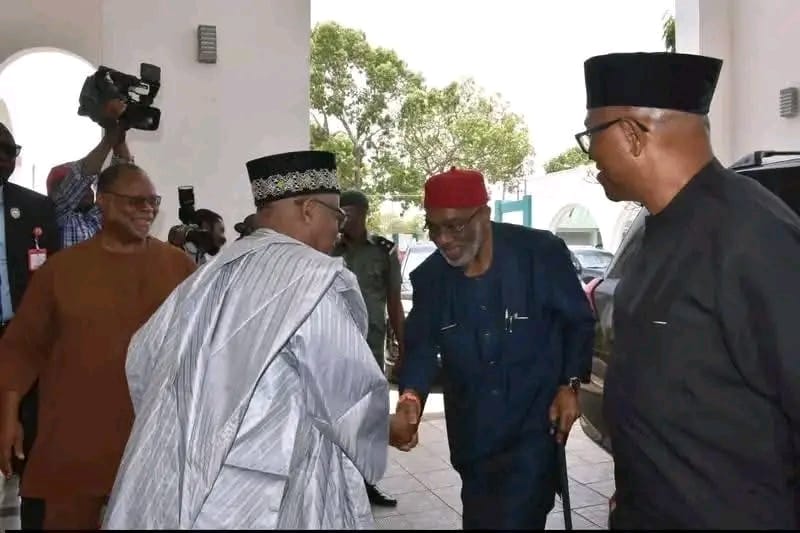
Former Anambra State governor and key opposition figure, Peter Obi, alongside other leaders of the ADC coalition, paid a strategic visit to Bauchi State Governor, Bala Mohammed, in what observers describe as a major step toward deepening opposition unity ahead of the 2027 general elections.
The high-profile meeting is seen as part of ongoing efforts to consolidate the African Democratic Congress (ADC) coalition and attract more influential political figures across party lines into its fold. Political analysts say the visit carries strong symbolic significance, particularly in bridging the long-standing political divide between Northern and Southern Nigeria.
The engagement has reportedly created renewed warmth and trust between key northern and southern political blocs, challenging the long-standing narrative of division and “divide-and-rule” politics that has often shaped Nigeria’s electoral landscape.
Described by supporters as a “unity ambassador” of the ADC coalition, Peter Obi’s outreach continues to position him as a central figure in opposition realignment. Sources close to the meeting suggest that the discussions left Bala Mohammed reassured and optimistic about his next political steps, with growing speculation around his possible alignment with the ADC coalition.
This visit mirrors previous strategic consultations by Obi with other opposition stakeholders, several of which reportedly paved the way for prominent political actors to join the coalition.
Many see this latest move as another historic moment in the effort to build a broad-based national alliance capable of challenging the ruling establishment in 2027, while fostering stronger national cohesion across regional and political divides.
The visit by Peter Obi and other leaders of the ADC coalition to Bauchi State Governor Bala Mohammed goes far beyond a routine political courtesy call—it represents a calculated move in the ongoing restructuring of Nigeria’s opposition ahead of the 2027 presidential election.
At a time when many Nigerians are expressing frustration over economic hardship, insecurity, and governance concerns, opposition leaders are increasingly seeking a united front capable of challenging the dominance of the ruling party. The ADC coalition has emerged as one of the platforms attempting to bring together politicians from different ideological, regional, and party backgrounds under one national movement.
Peter Obi’s involvement in these consultations is particularly significant because of his wide appeal among youths, the middle class, and reform-minded voters across the country. His repeated engagements with northern political leaders signal an intentional effort to break the long-standing perception that opposition politics is regionally divided. By visiting Bala Mohammed—a prominent northern political figure and influential governor—the coalition is sending a message that national unity and strategic inclusiveness are central to its mission.
The north-south political relationship in Nigeria has often been shaped by mistrust, ethnic sentiments, and elite-driven narratives designed to keep opposition forces fragmented. This visit helps counter that by creating direct engagement and personal trust between influential leaders from both regions. It reassures northern stakeholders that the coalition is not a sectional project, while also strengthening southern confidence in a truly national alliance.
Governor Bala Mohammed’s role in this equation is also important. As a sitting governor with political weight in the North-East and influence within broader northern political structures, his potential alignment with the ADC coalition could trigger further realignments. His support—or even openness to collaboration—could encourage other governors, lawmakers, and political stakeholders to reconsider their current party loyalties.
Observers also note that similar quiet diplomatic moves by Peter Obi in the past contributed to other prominent opposition figures identifying with the coalition. This pattern suggests a deliberate strategy of relationship-building before formal political declarations are made.
Ultimately, the meeting symbolizes more than coalition politics—it reflects an attempt to redefine opposition leadership around national consensus rather than regional rivalry. For supporters of the ADC coalition, it is another historic step toward building a stronger, broader, and more competitive political alternative for Nigerians in 2027.
Peter Obi Revisits Islamic School in Bauchi, Donates ₦5 Million Scholarship Support for Outstanding Students;
Former Anambra State governor and prominent opposition leader, Peter Obi, further strengthened his engagement in Bauchi State with a return visit to an Islamic school in the community, where he donated ₦5 million to support scholarships for high-performing students.
The donation, according to sources close to the visit, is aimed at encouraging academic excellence and supporting brilliant students from less privileged backgrounds who have demonstrated exceptional performance in their studies.
Peter Obi, known for his consistent advocacy for education and human capital development, emphasized the importance of investing in young people, describing education as the most powerful tool for national transformation. He noted that supporting students, regardless of region, religion, or background, remains critical to building a stronger and more united Nigeria.
The gesture was warmly received by community leaders, school administrators, and residents, who described the intervention as timely and impactful, especially in a period where many families face economic difficulties that threaten children’s access to quality education.
His visit to the Islamic school also carries symbolic significance, reinforcing his message of national unity, inclusiveness, and grassroots connection. Observers noted that the move further deepens his relationship with northern communities and demonstrates practical commitment beyond political consultations.
Coming shortly after his strategic meeting with Bauchi State Governor Bala Mohammed and other opposition stakeholders, the school visit adds another layer to Peter Obi’s growing political and social outreach in the North.
Many supporters see the donation not just as charity, but as a reflection of his long-standing leadership philosophy—that governance must prioritize education, youth empowerment, and direct investment in the future of the nation.


