

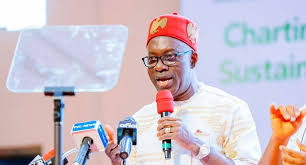
Recent public commentary by Anambra State Governor Charles Soludo has once again sparked national debate, highlighting the growing influence of political messaging in Nigeria’s media-driven environment.
Soludo, a former Central Bank governor and prominent economist, has become known not only for his governance record but also for his periodic public statements, which often generate widespread reactions across political and social platforms.
Analysts say the governor’s remarks—particularly those referencing high-profile figures such as Peter Obi—tend to resonate strongly within Nigeria’s polarized political landscape, frequently triggering debates that dominate public discourse.
Observers note that such interventions may reflect a broader strategy of maintaining relevance in an era where media visibility plays a critical role in shaping political influence. In today’s fast-paced information ecosystem, public figures are under increasing pressure to remain part of ongoing conversations, with silence often perceived as political disengagement.
Critics argue that the pattern of provocative commentary risks shifting attention away from governance and policy issues, reducing political engagement to recurring media controversies. Supporters, however, contend that Soludo’s statements represent legitimate intellectual contributions to national debates, emphasizing the importance of open discourse in a democracy.
Media experts also point to the role of social media and digital platforms in amplifying such exchanges, noting that controversial or high-profile remarks tend to gain more traction than routine policy updates.
The recurring cycle—statements, reactions, and widespread amplification—has raised questions about the interplay between political communication and public response, with some suggesting that audience engagement itself sustains the momentum of such debates.
As Nigeria’s political environment continues to evolve ahead of future elections, Soludo’s prominence in public discourse underscores the enduring link between political messaging, media attention, and public perception.


