

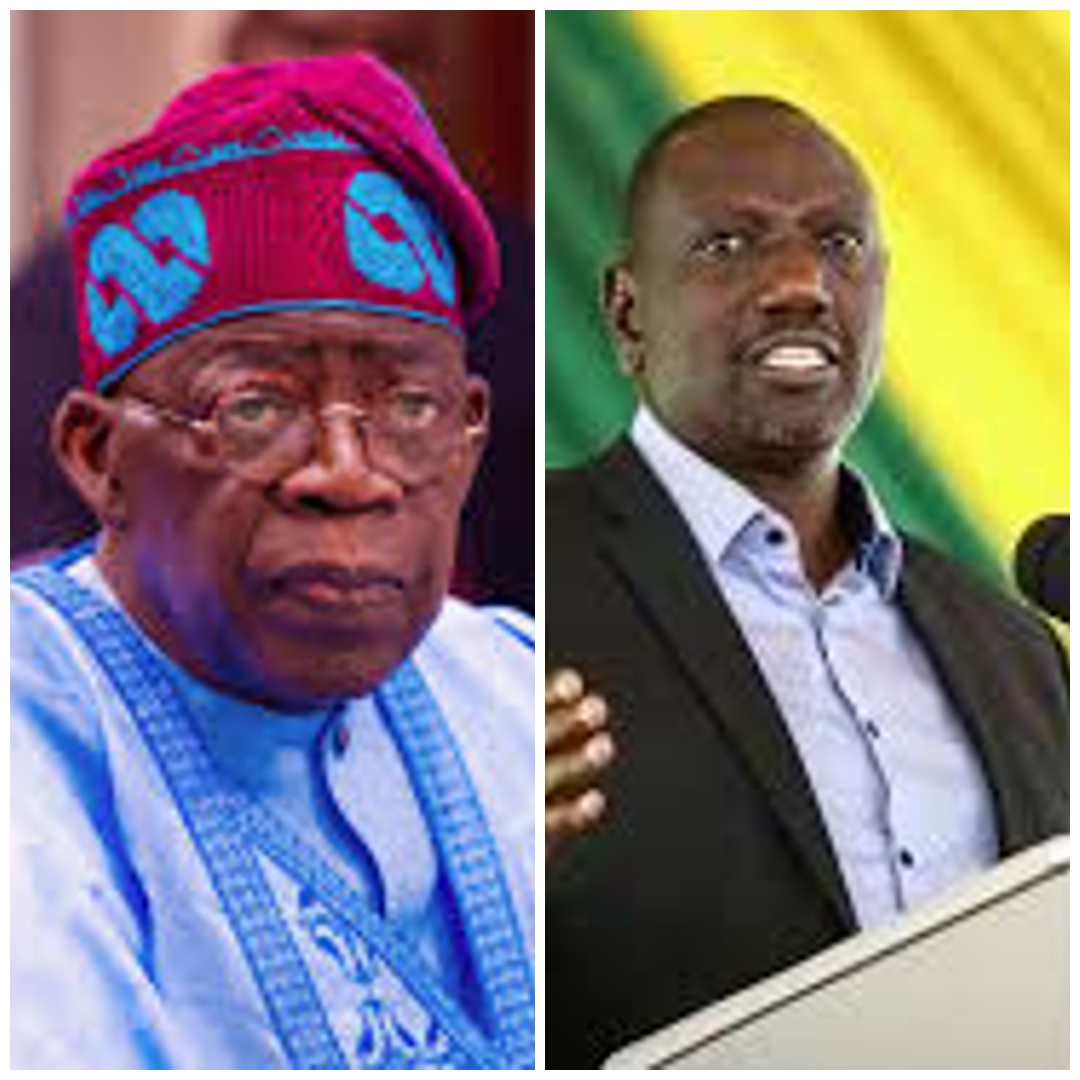
President William Ruto has stirred fresh continental debate after openly criticising Nigeria’s economic conditions and English usage, pushing back against recent remarks by President Bola Tinubu that Nigerians are better off than citizens of other African nations.
Ruto’s comments, delivered during a public engagement, were seen as a direct response to Tinubu’s assertion, which had earlier drawn mixed reactions across Africa. While Tinubu’s statement was interpreted by supporters as an expression of confidence in Nigeria’s economic resilience, critics viewed it as disconnected from the realities facing many Nigerians.
In his response, Ruto questioned both the economic outlook and communicative clarity often associated with Africa’s most populous nation. He suggested that Nigeria’s current economic struggles—marked by inflation, currency instability, and cost-of-living pressures—make it difficult to sustain claims of relative prosperity.
The Kenyan leader’s remarks have quickly gained traction online and in policy circles, igniting conversations about governance, economic performance, and national perception across the continent.
Nigeria, located in Nigeria, remains Africa’s largest economy by size, but it continues to grapple with significant structural challenges. Recent reforms, including fuel subsidy removal and currency adjustments, have triggered both praise for long-term vision and criticism over immediate hardship for citizens.
On the other hand, Kenya, under Ruto’s leadership, has also faced economic headwinds, including rising fuel prices and public protests over taxation. This context has led some analysts to describe the exchange between the two leaders as reflective of broader continental pressures, where governments are increasingly sensitive to public perception and comparative performance.
Political observers note that such public exchanges between African leaders are relatively uncommon and may signal a shift toward more direct engagement—or rivalry—on policy narratives.
“Leaders are no longer speaking only to domestic audiences; they are now engaging in a continental conversation about who is doing better and why,” one analyst said.
Reactions within Nigeria have been swift and divided. Some citizens have welcomed Ruto’s comments as a blunt but necessary reality check, while others have criticized them as unnecessary and diplomatically insensitive.
Supporters of Tinubu argue that Nigeria’s economic potential, entrepreneurial base, and regional influence still place it ahead of many peers, despite current difficulties. They insist that short-term economic pain is part of a broader reform agenda aimed at long-term stability.
Critics, however, contend that comparisons should be grounded in measurable indicators such as purchasing power, employment levels, and quality of life, where many Nigerians continue to face significant challenges.
The debate has also touched on language, with Ruto’s remarks about English usage drawing both amusement and criticism. While some saw it as a light jab, others viewed it as an unnecessary dig that detracts from more substantive issues.
Diplomatic experts caution that while such exchanges can energize public discourse, they also carry risks for bilateral relations. Nigeria and Kenya maintain strong ties in trade, diplomacy, and regional cooperation, and both countries play influential roles within the African Union.
As the conversation continues, the episode underscores a deeper issue: the growing demand for accountability and performance among African leaders. Citizens across the continent are increasingly comparing governance outcomes and expecting tangible improvements in their daily lives.
Whether the exchange between Ruto and Tinubu will escalate or give way to diplomatic clarification remains to be seen. For now, it has ignited a broader reflection on leadership, economic reality, and the narratives nations project about themselves in an increasingly interconnected Africa.


