

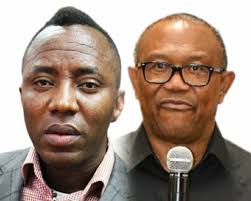
ABUJA — Nigeria’s political discourse ahead of the 2027 general elections is increasingly being shaped by a fierce online debate between supporters of Peter Obi and Omoyele Sowore, reflecting broader tensions within the country’s opposition space.
The debate, which has gained traction across social media platforms, centers on who is better positioned to challenge incumbent President Bola Ahmed Tinubu in what is expected to be a highly competitive election scheduled for January 16, 2027.
Peter Obi, who contested the 2023 presidential election under the Labour Party and secured over six million votes, remains a prominent figure in Nigeria’s opposition politics. Recent developments indicate his alignment with the African Democratic Congress (ADC), a move seen by analysts as part of ongoing coalition-building efforts aimed at consolidating opposition strength.
On the other hand, Omoyele Sowore, leader of the African Action Congress (AAC), continues to draw support from segments of Nigeria’s youth population, leveraging his long-standing activism and association with movements such as #RevolutionNow. Despite receiving just over 14,000 votes in the 2023 election, Sowore’s supporters argue that his message resonates with Nigerians seeking radical political change.
The clash between the two camps has been particularly intense online. Supporters of Obi argue that the fragmentation of opposition votes could inadvertently benefit the ruling party, warning that multiple strong candidates could split the electorate and weaken the chances of unseating the incumbent.
Conversely, Sowore’s backers have been critical of Obi’s leadership style and political strategy, questioning his capacity to deliver transformative change. They advocate for what they describe as a more “revolutionary” approach to governance, positioning Sowore as a candidate willing to challenge entrenched political structures.
Political analysts say the debate highlights a recurring challenge in Nigeria’s democratic process: the difficulty of building a unified opposition front. “The issue is not just about personalities,” an Abuja-based analyst noted. “It’s about strategy, ideology, and the ability to mobilize a broad coalition of voters.”
The discussion also underscores the growing influence of digital platforms in shaping political narratives. Social media has become a key battleground where supporters of different candidates amplify their messages, critique opponents, and attempt to sway public opinion.
Beyond the online exchanges, the broader political landscape remains fluid. Ongoing talks around alliances and coalitions suggest that alignments could still shift significantly before the election. The possibility of mergers or strategic withdrawals by candidates cannot be ruled out as parties seek to maximize their chances.
For many Nigerians, the stakes are high. The 2027 election is expected to address critical issues such as economic recovery, security, and governance reforms. As such, voters are closely watching how opposition figures position themselves and whether they can present a credible alternative.
As the countdown to 2027 continues, the Obi-Sowore debate serves as a microcosm of the larger political contest—one defined by competing visions, passionate support bases, and the enduring question of whether unity or division will shape the outcome at the polls.


