

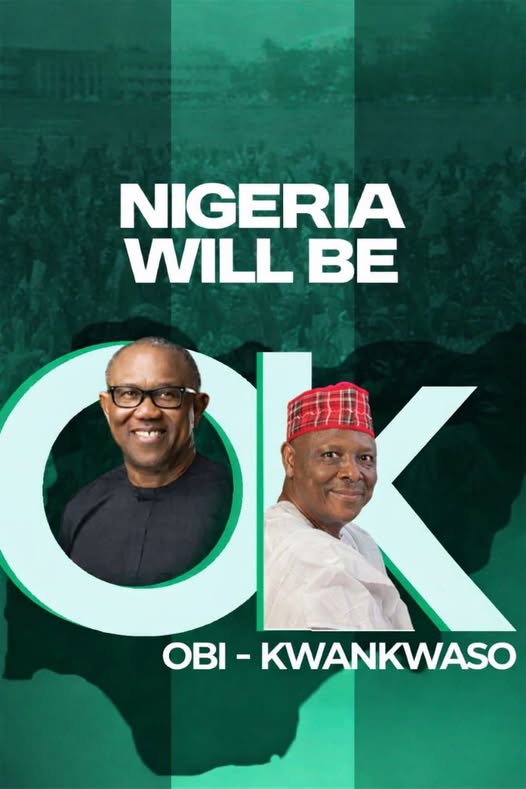
ABUJA — Political permutations ahead of Nigeria’s 2027 general election have taken a fresh twist following claims that Rabiu Musa Kwankwaso may be open to serving as vice-presidential candidate under Peter Obi on the platform of the African Democratic Congress (ADC).
The assertion was made by Ibrahim Abdulkarim, a known associate of Obi, who disclosed on April 17, 2026, that Kwankwaso had held multiple meetings with the former Labour Party presidential candidate and had “committed” to a joint ticket ahead of the next election cycle.
According to Abdulkarim, the proposed alliance is part of broader efforts to consolidate opposition forces and present a united front capable of challenging the ruling establishment. His remarks have since stirred widespread reactions across Nigeria’s political landscape, with analysts describing the development as both significant and uncertain.
Kwankwaso, a former presidential candidate and influential political figure in northern Nigeria, recently exited the New Nigeria Peoples Party (NNPP), a move widely interpreted as positioning himself within emerging coalition frameworks. His reported alignment with the ADC has fueled speculation that the party may become a central platform for opposition realignment ahead of 2027.
Grassroots political groups, including the “OK Movement,” have openly backed the idea of an Obi-Kwankwaso ticket, arguing that such a pairing could bridge regional and demographic divides. Supporters claim the alliance could significantly alter the electoral equation and pose a formidable challenge to incumbent President Bola Ahmed Tinubu.
However, the narrative remains far from settled. Kwankwaso had previously dismissed the possibility of playing second fiddle in a viral video, stating that he considers himself “politically bigger” than the vice-presidential role being suggested. This earlier stance has cast doubt on the credibility of claims that he has now agreed to such an arrangement.
Adding another layer of complexity is the recent engagement between Kwankwaso and Atiku Abubakar, a long-standing presidential aspirant. Atiku’s visit has been interpreted by observers as part of ongoing consultations among opposition heavyweights seeking to forge alliances or test political waters ahead of 2027.
Political analysts say the situation reflects a broader struggle within the opposition to balance ambition, regional interests, and strategic necessity. “Coalition politics in Nigeria is always fluid,” one Abuja-based analyst noted. “Statements made today can change tomorrow depending on negotiations, power-sharing agreements, and electoral calculations.”
Another key issue shaping these discussions is the debate over rotational presidency, a sensitive topic in Nigeria’s political arrangement. With different regions advocating for representation, any potential ticket will likely need to navigate complex expectations around zoning and inclusivity


