

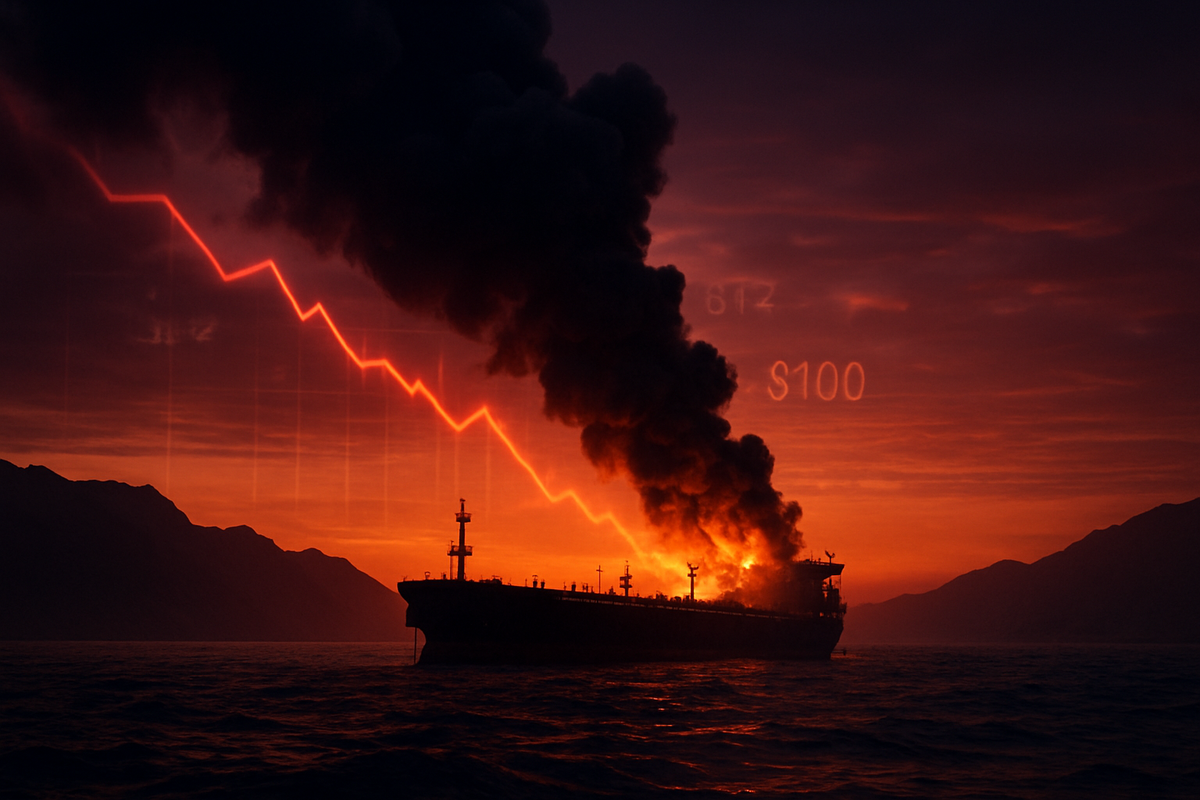
ABUJA — Global markets were thrown into renewed uncertainty on Friday after Iran abruptly re-closed the strategic Strait of Hormuz just hours after declaring it open, escalating tensions with the United States and sending shockwaves through the international energy sector.
The dramatic reversal followed a statement by Iran’s powerful military arm, the Islamic Revolutionary Guard Corps (IRGC), which announced that control of the vital waterway had “returned to its previous state” due to the continued U.S. blockade on Iranian ports.
Earlier in the day, Tehran had declared the strait “completely open,” prompting a brief drop in global oil prices and a sense of relief across international markets. However, that optimism quickly evaporated when Iranian authorities reversed course, effectively shutting down one of the world’s most critical oil transit routes within the same day.
Iran’s Parliament Speaker, Mohammad Bagher Ghalibaf, made the country’s position explicit, stating that the strait would remain closed as long as U.S. sanctions and maritime restrictions persist. “With the continuation of the blockade, the Strait of Hormuz will not remain open,” he declared, framing the issue as a direct response to what Iran describes as economic warfare.
The United States, however, maintains that Iran’s actions violate international maritime law, insisting that freedom of navigation must be upheld. Washington has repeatedly rejected Tehran’s characterization of its sanctions regime as “piracy,” instead describing it as a legitimate tool of foreign policy.
The Strait of Hormuz is widely regarded as the most important oil chokepoint in the world, with a significant portion of global crude supply passing through its narrow waters. Industry reports indicate that the sudden restriction of shipments—estimated at over 90 percent, or roughly 10 million barrels per day—has already begun to disrupt global supply chains.
According to shipping data, more than 200 oil tankers remain stranded within the Gulf, unable to transit freely. The ripple effects are being felt worldwide, with rising energy prices, increased transportation costs, and mounting concerns over agricultural inputs such as fertilizer, which depend heavily on stable fuel supplies.
Market analysts say the rapid opening and closing of the strait within hours highlights the fragile balance of power in the region. “This is not just a regional issue—it’s a global economic pressure point,” one energy expert noted. “When the Strait of Hormuz fluctuates, the entire world feels it.”
The standoff also casts a shadow over ongoing diplomatic efforts aimed at de-escalating tensions between Iran and the United States. With a temporary ceasefire reportedly set to expire in the coming days, fears are growing that the situation could deteriorate further if no agreement is reached.
Observers warn that the crisis underscores a broader geopolitical reality: control over strategic chokepoints can influence not only regional security but also the stability of global markets. As both nations hold firm to their positions, the world finds itself caught in the middle—its economy swinging between relief and crisis within a matter of hours.
For now, the situation remains fluid, with the fate of the strait—and by extension, global energy stability—hinging on whether diplomacy can prevail over confrontation in the days ahead.


