

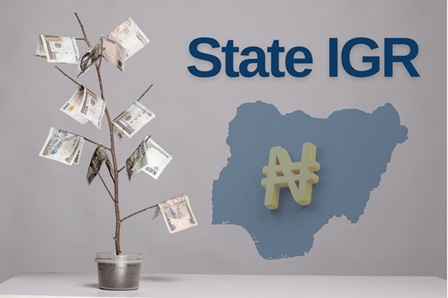
Nigeria’s 35 states that reported data generated a combined N2.43 trillion in Internally Generated Revenue (IGR) in the first half of 2026, representing a 34 per cent increase compared with N1.815 trillion recorded by the same states in the comparable period of 2024.
The increase is significant because it occurred against the backdrop of persistent economic pressure on households and businesses, with Nigerians continuing to grapple with high living costs and reduced purchasing power.
According to findings reported by The PUNCH, Rivers State was excluded from the latest six-month comparison, leaving 35 states in the dataset. Comparable first-half 2025 figures were also unavailable for many states, making the 2024–2026 comparison the basis for the reported 34 per cent growth.
The sharp rise in internally generated revenue suggests that state governments are becoming increasingly capable of raising funds from sources within their jurisdictions rather than relying entirely on allocations from the Federation Account.
IGR typically comes from taxes, levies, fees, business registrations, property-related charges and other internally generated sources. For state governments, stronger internally generated revenue can provide greater fiscal flexibility and reduce dependence on federal allocations.
The development is particularly important following the economic reforms implemented by the Federal Government since 2023, including the removal of petrol subsidies and changes to the foreign-exchange regime.
Those reforms have increased the revenue available to the three tiers of government in some respects, but they have also contributed to significant increases in the cost of living.
The increase in state IGR therefore presents a complicated picture of Nigeria’s economy.
On one hand, the ability of states to collect more revenue could indicate improvements in tax administration, digitalisation, economic activity and compliance. On the other, rising government revenue does not necessarily mean that ordinary citizens are becoming wealthier.
Indeed, the increase comes at a time when households continue to face pressure from food, transportation, housing and other essential expenses.
The central question is therefore how effectively state governments will convert the additional revenue into tangible improvements in citizens’ lives.
States require substantial resources to finance roads, schools, hospitals, water supply, security, agricultural development and other public services. Increased IGR could provide an opportunity to accelerate such investments.
But higher revenue also creates a greater responsibility for transparency and accountability.
Recent expenditure figures have already raised concerns about how some states deploy public funds. A separate PUNCH report found that 33 state governments spent at least N512.10 billion on Government Houses, governors’ offices and travel during the first six months of 2026.
The juxtaposition between rising internally generated revenue and substantial government expenditure on administrative activities is likely to intensify calls for states to prioritise development spending.
For taxpayers, the issue is straightforward: if governments are collecting more money, citizens should be able to see corresponding improvements in public services.
The increase in IGR could nevertheless represent an important step towards stronger state-level fiscal independence.
Nigeria’s federal structure places significant responsibilities on state governments, while many states remain heavily dependent on federal allocations to finance their budgets.
A stronger internal revenue base could give states greater capacity to plan long-term development programmes and respond to emergencies without waiting for additional federal support.
However, states must also be careful not to pursue aggressive taxation that further burdens households and struggling businesses.
The objective should be to broaden the tax base, improve compliance and reduce leakages rather than simply increasing the financial burden on existing taxpayers.
The latest figures also come amid broader signs of changing revenue dynamics across Nigeria. The Nigeria Revenue Service recently reported that national tax collections had risen from N12.3 trillion in 2023 to N27.1 trillion by July 2026, which it attributed partly to tax-system digitalisation and reforms.
Together, the developments suggest that government revenue mobilisation is expanding across different levels of the Nigerian economy.
But for millions of Nigerians still struggling with the cost of basic necessities, the real measure of economic progress will not be the size of government revenue alone.
It will be whether those revenues translate into better roads, functional hospitals, quality schools, reliable infrastructure, jobs and a meaningful improvement in living standards.
The N2.43 trillion generated by states is therefore both an achievement and a test: the more revenue governments collect, the greater the responsibility to demonstrate where the money goes.


