

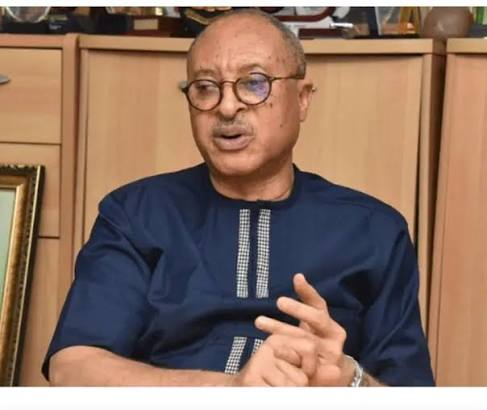
Professor of Political Economy Pat Utomi has described the outcome of the recent Osun State governorship election as an indication that voters can play a decisive role in resisting electoral manipulation.
Utomi’s comments followed the re-election of Governor Ademola Adeleke, with the political economist arguing that the Osun experience offers lessons for Nigerians ahead of the 2027 general elections.
The professor has consistently advocated for stronger safeguards around Nigeria’s electoral process, particularly measures that would make voting and result transmission more transparent.
His latest position comes amid continuing national debate over the credibility of elections, voter participation and the ability of citizens to ensure that their ballots reflect the final outcome.
Utomi has previously urged Nigerians to take greater responsibility for protecting their votes. In February, he said, “The people are the ultimate authority,” while advocating stronger citizen pressure on elected representatives over electoral reforms.
The development is important because political parties are already preparing for the 2027 elections, while civil society groups are pushing for greater transparency in the electoral system.
Utomi, who leads the Movement for Credible Elections (MCE), has also raised concerns about aspects of the 2026 Electoral Act and the electronic transmission of election results. He has argued that public confidence could suffer if voters are not assured that results recorded at polling units will be accurately transmitted and verified.
The political economist has proposed additional measures to strengthen election monitoring, including an independent result-verification platform and the deployment of trained “vote marshals” to help safeguard the voting process.
Utomi’s comments on Osun therefore extend a broader argument that credible elections depend not only on electoral authorities but also on active citizens who participate and monitor the process.
However, the outcome of one state election cannot automatically predict the results of the 2027 presidential contest. Nigeria’s next general election will involve voters across all 36 states and the Federal Capital Territory, with political alliances, candidates, turnout and regional dynamics likely to shape the outcome.
As preparations for 2027 intensify, electoral transparency and voter protection are expected to remain central issues in Nigeria’s political debate.


