

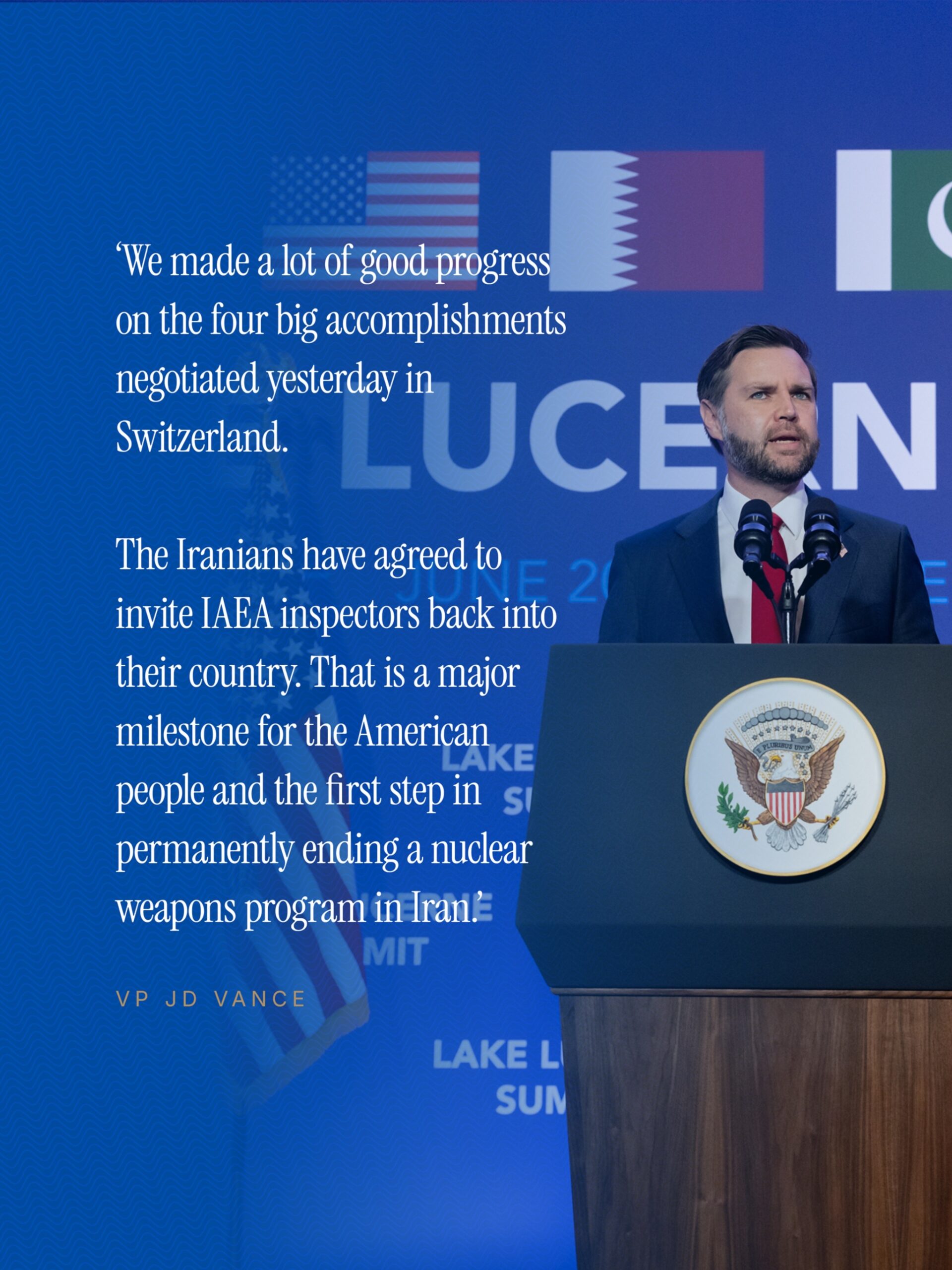
United States Vice President JD Vance has welcomed what he described as significant progress in diplomatic negotiations with Iran following two days of high-level talks at the Bürgenstock resort in Switzerland.
The discussions between American and Iranian officials resulted in an agreement for Iran to allow inspectors from the International Atomic Energy Agency (IAEA) to return to the country, a move viewed by Washington as an important step toward increasing transparency over Iran’s nuclear activities and preventing the development of nuclear weapons.
Speaking after the talks, Vance outlined what he considered four major achievements of the negotiations: maintaining freedom of navigation through the Strait of Hormuz, sustaining a broader regional ceasefire including tensions involving Lebanon, restoring IAEA monitoring mechanisms, and launching technical discussions between both sides.
The breakthrough follows a 60-day diplomatic roadmap established under a memorandum reached during earlier engagements between the two countries, designed to reduce tensions after months of military confrontation and instability in the Middle East.
U.S. President Donald Trump said the agreement would also facilitate economic arrangements, including the use of unfrozen Iranian assets for the purchase of American agricultural products.
Iranian officials, however, have sought to present the outcome differently, insisting that the country has not accepted any new restrictions or commitments beyond existing obligations and that its peaceful nuclear programme remains a sovereign right.
The differing interpretations have prompted cautious reactions from analysts and international observers, some of whom questioned whether the understandings reached in Switzerland represent a lasting diplomatic breakthrough or merely a temporary confidence-building measure.
The negotiations at Bürgenstock are considered one of the most substantial direct engagements between Washington and Tehran in recent years and could influence the future of regional security, global energy markets, and the long-running dispute over Iran’s nuclear ambitions.
Supporters of the diplomatic process argue that renewed inspections and dialogue reduce the risk of escalation and provide a framework for resolving disagreements through negotiation.
Skeptics, however, warn that previous agreements between the two nations have faced implementation challenges, making sustained verification, political commitment, and continued diplomacy essential to achieving a durable settlement.
With technical discussions expected to continue in the coming weeks, the international community will closely monitor whether the latest understandings can evolve into a broader agreement capable of easing decades of hostility between the United States and Iran.


