

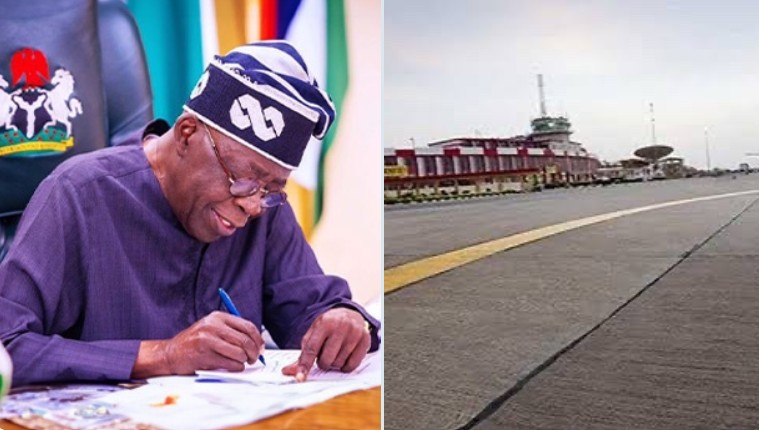
President Bola Ahmed Tinubu has approved ₦46 billion for the resurfacing and reconstruction of the runway at Mallam Aminu Kano International Airport, as part of the Federal Government’s ongoing efforts to modernize Nigeria’s aviation infrastructure.
The approval was announced during an event at the airport, where the Minister of Aviation and Aerospace Development, Festus Keyamo, described Kano as the commercial hub of Northern Nigeria and emphasized the strategic importance of upgrading one of the country’s busiest airports.
According to the minister, the project will address the deteriorating condition of the airport’s runway, enhance operational safety, improve efficiency and strengthen Kano’s competitiveness as a major aviation gateway for passengers and cargo.
Keyamo explained that the rehabilitation forms part of the Federal Government’s broader aviation modernization programme under President Tinubu’s Renewed Hope Agenda, which seeks to improve airport infrastructure, enhance passenger experience and attract greater investment into the aviation sector.
The runway reconstruction is expected to reduce operational disruptions, improve aircraft movement and ensure compliance with international aviation safety standards.
In addition to the runway project, the government confirmed that work is already progressing on the expansion and upgrade of the airport’s Hajj Terminal, a facility that plays a vital role in transporting thousands of Muslim pilgrims from Northern Nigeria to Saudi Arabia each year.
During the ceremony, the Federal Government also honoured aviation pioneer Mallam Muhammadu Adamu Dankabo by naming the airport’s domestic terminal after him in recognition of his contributions to the development of Nigeria’s aviation industry.
Government officials said the airport upgrade is expected to stimulate economic activities, facilitate trade, improve regional connectivity and create employment opportunities during both the construction and operational phases.
Industry experts have welcomed the investment, noting that modern airport infrastructure is essential for enhancing aviation safety, reducing maintenance costs and positioning Nigeria as a competitive regional aviation hub.
However, the approval has generated mixed reactions among members of the public. While many welcomed the investment as a necessary step toward improving critical infrastructure, others questioned whether such a significant allocation should take priority over pressing needs in sectors such as healthcare, education and road construction.
Economic analysts argue that infrastructure investments can generate long-term economic benefits through increased commercial activity, tourism and improved logistics, provided projects are delivered efficiently and transparently.
They also stress the importance of effective project management, timely completion and strict accountability to ensure value for public funds.
The Kano runway rehabilitation is expected to become one of the largest aviation infrastructure projects currently underway in Nigeria and forms part of the Federal Government’s broader efforts to upgrade airports across the country.
As work progresses, stakeholders in the aviation sector have expressed optimism that the project will improve operational reliability, strengthen passenger confidence and reinforce Kano’s position as a key commercial and transportation hub in Northern Nigeria.


