

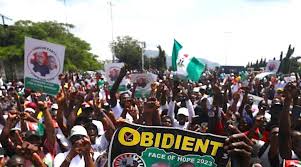
Nigeria is approaching a dangerous crossroads. Hunger is no longer a metaphor, anger is no longer muted, and despair has ceased to be private. Across markets, campuses, places of worship, and homes, a single sentiment echoes louder by the day: the system is no longer working for the many, only for the few.
This is the context in which the ruling APC and President Bola Tinubu must read the political mood ahead of 2027. Not through the lens of party supremacy or elite calculations, but through the lived reality of Nigerians whose purchasing power has collapsed, whose security has evaporated, and whose faith in governance is hanging by a thread. History is unforgiving to governments that mistake endurance for consent.
The social contract has been stretched to breaking point. When a nation’s majority can no longer afford food, transport, healthcare, or dignity, elections stop being routine democratic exercises and begin to resemble referendums on survival. At that stage, propaganda fails, intimidation backfires, and manipulation becomes combustible. Hungry and angry citizens are not easily pacified.
This is why 2027 cannot be business as usual. Any attempt to impose outcomes, tilt institutions, or recycle the familiar playbook of state capture will not merely delegitimise the process; it risks provoking a deeper national crisis. Nigeria has reached a point where only free, fair, credible, and transparent elections can serve as a pressure valve. Anything short of that may push public frustration beyond the limits of restraint.
The APC rose to power in 2015 on the back of public revolt against failure. Ironically, it now stands accused by growing numbers of Nigerians of repeating and even exceeding the very excesses it once condemned. Inflation, unemployment, insecurity, debt, and institutional decay have converged into a perfect storm. When governments appear distant from suffering, citizens eventually seek change, not persuasion.
This is not a call to chaos. It is a warning against arrogance. Nations do not collapse only through coups or wars; they also unravel when leaders ignore legitimate grievances and suppress democratic correction. Elections are meant to be a release mechanism for public anger, not a trigger for it.
If the Tinubu administration and the APC still believe in Nigeria’s stability, then strengthening INEC, respecting the rule of law, allowing opposition to breathe, and guaranteeing electoral transparency should not be seen as concessions, but as acts of national preservation. Power retained through credibility endures longer than power enforced through fear.
Ultimately, no party is entitled to rule indefinitely. Governments are tenants, not owners, of authority. When the people decide they have had enough, history shows that no amount of elite consensus can override mass discontent.
Nigeria is watching. The world is watching. And 2027 will test whether those in power have learned that legitimacy flows upward, from the people; or whether they will repeat the mistakes that precede political collapse.
Only a credible election can calm a nation on edge. Anything else may hasten the reckoning.


