

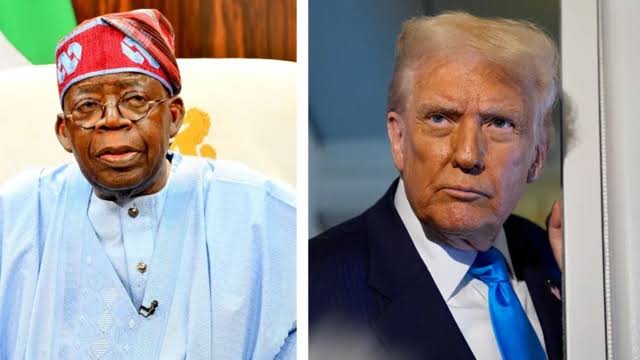
As Nigeria approaches the 2027 general election, growing questions surround the relationship between President Bola Ahmed Tinubu’s administration and the government of United States President Donald Trump. The debate is no longer limited to whether Washington will support Nigeria on security, democracy and human rights. It now also concerns America’s broader strategic interests in Nigeria, particularly in energy, security and geopolitics, and what those interests could mean for Nigerians. However, it would be premature to conclude that the United States has abandoned counterterrorism in favour of oil. Available evidence shows continued cooperation, including a reported joint operation against Islamic State elements in the Lake Chad region, intelligence-sharing, military training and counterterrorism efforts under a 2026 Defence Cooperation Roadmap.
Nigeria remains one of Africa’s most important energy producers and a strategically located country in a region facing serious instability. This naturally raises questions about whether Washington’s economic and security interests could sometimes take precedence over democratic accountability. Yet there is currently no credible public evidence that President Trump has agreed to support Tinubu’s political survival in exchange for access to Nigerian oil. Recent U.S.-Nigeria engagements have publicly focused on security cooperation, counterterrorism and bilateral relations, while Trump has praised Tinubu’s efforts against terrorism. The responsible approach, therefore, is to distinguish between legitimate concerns about foreign influence and claims that remain unsupported by evidence.
The controversy surrounding records connected to Tinubu’s long-running Chicago case remains politically sensitive in Nigeria. Critics have questioned why documents they believe should be available have not been fully released and have called for greater transparency from the U.S. government. However, there is no verified evidence that Trump personally ordered the withholding of those records or is using them as leverage to keep Tinubu in power. Similarly, claims that Washington intends to remove Tinubu or determine the outcome of Nigeria’s 2027 election require proof. Recent fact-checking has found several claims about Trump’s alleged statements concerning Tinubu and U.S. counterterrorism discussions to be fabricated or unsupported. Nigerians should continue asking questions, but those questions must be grounded in facts rather than speculation.
The deeper concern is whether Nigeria is becoming too dependent on external powers to shape its security, economy and political direction. Foreign influence can operate through economic dependence, military cooperation, intelligence-sharing, diplomatic pressure and control over critical resources without directly appointing a president. This is where the issue of neocolonialism becomes relevant. The danger arises when national leaders value foreign approval more than domestic accountability. At the same time, Nigerians continue to face a brutal security crisis. Reports of mass abductions and deaths in Niger State demonstrate that security cooperation must ultimately be judged by whether citizens can live, travel and send their children to school without fear. Eliminating militant commanders is important, but national security must also protect ordinary people.
The 2027 election must belong to Nigerians, not foreign governments. America will pursue American interests, just as China and European countries will pursue theirs; Nigeria must pursue Nigerian interests. Voters must ensure that the election is not controlled by foreign pressure, religious manipulation, ethnic mobilisation, financial inducement or political patronage. The key questions should be who can secure Nigeria, build a stronger economy and ensure that the country’s natural resources benefit its people. Nigeria needs cooperation with America, but that relationship must be based on mutual interest, transparency, respect for sovereignty and accountability. Political freedom and economic independence cannot be achieved by outsourcing national decisions to external powers.
The evidence available today does not establish that Trump has abandoned counterterrorism in Nigeria in favour of oil, nor that Washington is plotting Tinubu’s removal or guaranteeing his political survival. Nevertheless, concerns about sovereignty, foreign influence, natural resources and democratic accountability remain legitimate and deserve clear answers. The most important question is not what Donald Trump wants for Nigeria, but what Nigerians want for themselves. If the country is to resist neocolonial influence, it must build strong political, economic and democratic institutions capable of defending its interests. Nigeria’s future cannot be decided in Washington. It must be decided in Nigeria, by Nigerians.
Mr Akor Christian Oche otherwise known as Due Process is a human rights activist and a publisher at COPDEM Media TV.


