

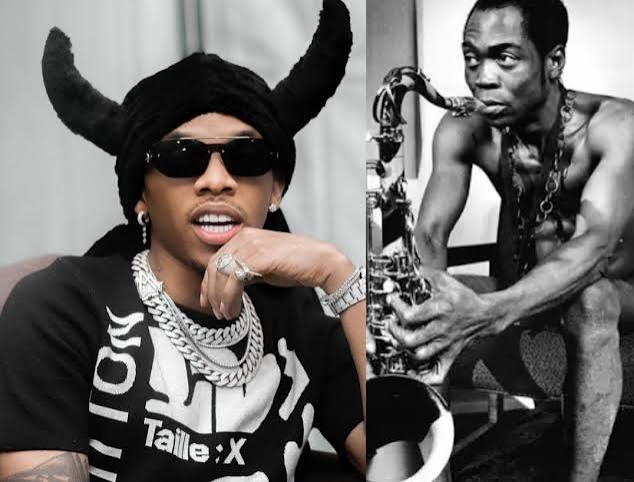
Nigerian singer Augustine Miles Kelechi, popularly known as Tekno, has challenged the widely held belief that late music icon Fela Anikulapo-Kuti was the originator of Afrobeats.
Tekno made the controversial remarks during an interview with Hot 97 FM in New York, where he argued that several African musicians and musical traditions contributed to the development of the sound now recognised globally as Afrobeats.
“Fela is not the originator of Afrobeats. Lagos people and the Yorubas might say he is the one, but I am from the East, and we had legends like Oliver De Coque,” Tekno said.
The singer specifically referenced late highlife musician Oliver De Coque and other eastern Nigerian artistes whose contributions, he argued, deserve greater recognition in discussions about the evolution of African popular music.
Tekno acknowledged Fela’s enormous influence but maintained that the legendary musician should not receive sole credit for the development of Afrobeats. He argued that Fela’s international exposure helped make his music more widely recognised around the world.
The comments have reignited a longstanding debate over the distinction between Afrobeat, the genre associated with Fela, and Afrobeats, the broader contemporary African pop movement that emerged decades later. Music commentators and members of the public have offered differing interpretations of Tekno’s position, with some arguing that the two terms should not be treated as interchangeable.
The discussion is significant because questions surrounding the origins of Afrobeats also involve the recognition of African musicians whose contributions helped shape modern Nigerian music.
Fela remains widely recognised for developing Afrobeat, blending traditional Nigerian rhythms with jazz, funk and political commentary. His influence has extended across generations of African and international musicians.
Meanwhile, contemporary Afrobeats has evolved into a global commercial force, with Nigerian artistes such as Tekno, Burna Boy, Wizkid and Davido helping expand the genre’s international audience.
Tekno’s remarks have therefore reopened a broader conversation about how African musical history is documented and which pioneers receive recognition for shaping the sound that now enjoys worldwide popularity.


