

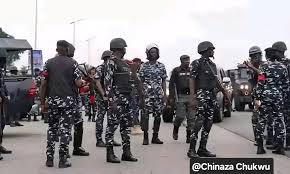
Security operatives have significantly increased their presence around the Presidential Villa in Abuja amid reports of a planned protest spearheaded by activist and former presidential candidate Omoyele Sowore.
The heightened security measures observed around the seat of government have sparked public attention as authorities prepare for possible demonstrations in the nation’s capital. Armed security personnel, checkpoints, and patrol teams were reportedly deployed to strategic locations surrounding the Presidential Villa, commonly known as Aso Rock.
The development comes as Sowore and his supporters continue to mobilize citizens to participate in protests aimed at drawing attention to issues including insecurity, economic hardship, governance concerns, and alleged human rights violations.
Security Presence Increases Across Key Areas
Residents and commuters around the Federal Capital Territory (FCT) reported an unusually heavy presence of security personnel near major roads leading to the Presidential Villa and other sensitive government facilities.
Security agencies have not officially linked the deployment to the planned protest, but observers believe the measures are intended to prevent disruptions and maintain public order during any demonstration activities.
Several checkpoints were reportedly established around strategic locations, while patrol vehicles and armed officers monitored movement in and around government districts.
Authorities have yet to issue any official statement restricting peaceful assembly, but security experts say governments often increase surveillance and operational readiness ahead of large-scale public protests.
Sowore Mobilizes Supporters
Omoyele Sowore, a former presidential candidate and prominent activist, has been vocal in his criticism of government policies and governance issues in Nigeria.
The activist has called on Nigerians to participate in peaceful demonstrations to express concerns over economic challenges, insecurity, and what he describes as the need for greater government accountability.
According to supporters of the planned protest, the exercise is intended to provide citizens with an opportunity to voice frustrations over rising living costs, unemployment, and other socio-economic challenges affecting households across the country.
Organizers insist that the planned gathering will remain peaceful and within the limits of the law.
Economic Hardship Fuels Public Discontent
The planned protest comes at a time when many Nigerians are grappling with economic difficulties, including inflation, high transportation costs, and increased prices of food and essential commodities.
Recent economic reforms introduced by the Federal Government have generated mixed reactions, with supporters arguing that the policies are necessary for long-term economic stability while critics contend that they have imposed significant short-term hardship on citizens.
Labour unions, civil society organizations, and advocacy groups have repeatedly called on authorities to implement measures that cushion the impact of economic reforms on vulnerable populations.
Political analysts believe these concerns could contribute to increased public participation in demonstrations and civic engagements across the country.
Government Maintains Commitment to Public Order
The Federal Government has consistently maintained that citizens have the constitutional right to peaceful protest while emphasizing the need to ensure public safety and protect critical national infrastructure.
Security agencies have also repeatedly warned against any attempts to hijack legitimate demonstrations for violent or unlawful activities.
Officials say security personnel are under instructions to maintain law and order and prevent any breakdown of peace during public gatherings.
Analysts note that security deployments around strategic national assets are common during periods of heightened political activity and public demonstrations.
Rights Groups Monitor Developments
Human rights organizations and civil society groups have urged security agencies to respect the rights of citizens while carrying out their duties.
Advocates for civil liberties argue that peaceful protest remains an important component of democratic governance and should be protected in accordance with constitutional provisions.
At the same time, they have encouraged demonstrators to conduct themselves peacefully and avoid actions that could endanger public safety.
As anticipation builds ahead of the planned protest, attention remains focused on Abuja, where authorities continue to monitor developments around the Presidential Villa and other key government facilities.
Whether the demonstration attracts large crowds or remains limited in scope, the event is expected to contribute to ongoing national discussions surrounding governance, economic conditions, security, and citizens’ rights in Nigeria.


