

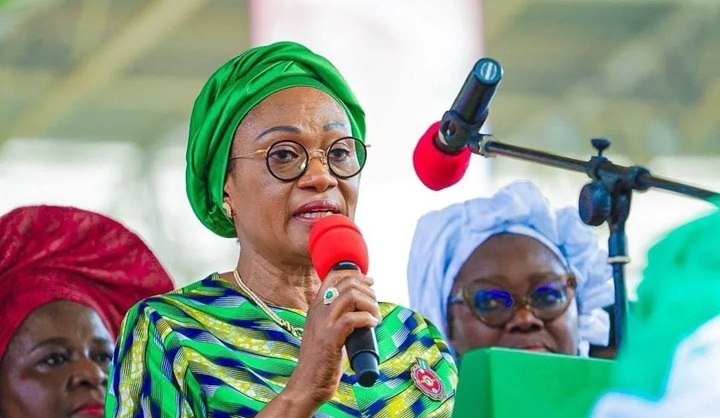
A video from the 2019 election season featuring Nigeria’s First Lady, Oluremi Tinubu, has resurfaced online, generating fresh controversy and debate over ethnic relations, political rhetoric, and religious identity.
In the clip, delivered largely in Yoruba, Tinubu appeared to encourage members of the Igbo community living in Lagos to integrate more fully into their host environment through learning the Yoruba language, intermarriage, and cultural interaction. The video also contains references that critics have interpreted as invoking traditional Yoruba deities in a manner they consider inappropriate or exclusionary.
The renewed circulation of the footage has drawn mixed reactions.
Critics argue that some of the comments can be perceived as ethnic or tribalistic, particularly in the context of longstanding political tensions surrounding indigene-settler relations in Lagos and debates about the participation of different ethnic groups in the state’s politics.
Others have linked the controversy to Tinubu’s public Christian identity and her association with the Redeemed Christian Church of God (RCCG), questioning the appropriateness of references to traditional deities.
Supporters, however, contend that the remarks have been taken out of context. They argue that the comments reflected familiar forms of political banter and cultural expression common in Yoruba-language political gatherings and were not intended as literal threats or expressions of ethnic hostility.
The controversy also revives discussions that first emerged during previous election cycles, when similar criticisms and defenses were made regarding the same video.
Political analysts note that ethnicity remains a sensitive issue in Nigerian politics, particularly in major urban centers such as Lagos, where large populations from different ethnic backgrounds live and participate in political processes.
They caution that older political statements are often reintroduced into public discourse during periods of heightened political competition and can generate renewed controversy when viewed outside their original context.
The debate comes amid broader national conversations about inclusion, citizenship, political participation, and inter-ethnic relations as political actors and citizens begin positioning themselves ahead of future elections.
While opinions remain sharply divided over the meaning and intent of the remarks, the resurfaced video underscores the continuing sensitivity of ethnic and identity-related issues in Nigeria’s democratic discourse.
As with many politically charged clips that re-emerge years later, interpretations vary widely depending on political affiliation, personal experience, and the broader context in which the footage is viewed.


