


The acquisition of one of Enugu Air’s aircraft has come under increasing public scrutiny following reports that the aircraft involved in a recent incident in Benin had previously operated with EgyptAir, remained in long-term storage for several years, and was later introduced into commercial service in Nigeria.
The controversy has reignited debate over aviation safety standards, regulatory oversight, and the responsibilities of the Federal Ministry of Aviation and Aerospace Development in safeguarding the lives of air travelers.
Critics have questioned whether the Ministry of Aviation, led by Festus Keyamo, is paying sufficient attention to core regulatory concerns. They argue that while political controversies have often dominated public discourse, the ministry’s primary obligation is to ensure that every aircraft operating within Nigeria’s airspace complies fully with both national and international airworthiness standards.
According to claims circulating in the public domain, the aircraft was delivered to EgyptAir in 2009 and operated for approximately ten years before being withdrawn from service in 2019. It was reportedly kept in storage for about six years before being acquired in February 2025 and subsequently transferred to Enugu Air.
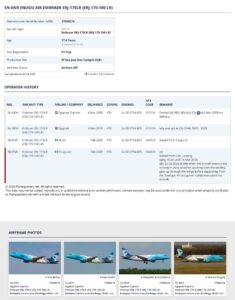
These reports have prompted questions from members of the public regarding the aircraft’s maintenance history, the inspections carried out before its return to service, and the certification process that cleared it for commercial operations in Nigeria.
Additional allegations circulating online claim that the aircraft’s airframe had previously sustained severe damage and had been declared a total loss by the manufacturer. However, these claims have not been independently verified, and no official confirmation has been issued by the aircraft manufacturer, the Nigeria Civil Aviation Authority (NCAA), the Nigerian Safety Investigation Bureau (NSIB), EgyptAir, or Enugu Air.
The absence of official clarification has fueled public speculation and increased calls for transparency from regulators. Aviation stakeholders argue that restoring public confidence requires timely disclosure of the aircraft’s maintenance records, service history, airworthiness certification, and the findings of any technical inspections conducted before it resumed passenger operations.
Experts in aviation safety caution that the age of an aircraft should not be confused with its airworthiness. Modern commercial aircraft are designed to remain in service for several decades, provided they undergo rigorous maintenance, scheduled inspections, replacement of worn components, and continuous certification in accordance with standards established by the International Civil Aviation Organization (ICAO) and enforced by national aviation authorities.
Likewise, aircraft can remain in storage for extended periods and safely return to service if they successfully complete all mandatory engineering inspections, maintenance procedures, and regulatory certification requirements. For this reason, neither an aircraft’s age nor its storage history alone is sufficient to determine whether it is safe to operate.
Nevertheless, where questions arise regarding an aircraft’s operational history, experts say transparency is essential. Public disclosure of inspection records and regulatory approvals can help dispel speculation, strengthen accountability, and reassure passengers that safety remains the overriding priority.
As of the time of this report, no official investigation has concluded that the aircraft’s previous service history or storage period contributed to the reported incident in Benin. Similarly, there has been no official confirmation that the aircraft had been permanently written off by its manufacturer before entering service with Enugu Air.
The controversy underscores the importance of robust regulatory oversight and proactive communication by aviation authorities. Until the relevant agencies release the outcome of their investigations and clarify the aircraft’s certification history, many of the claims circulating in the public domain remain unverified.
Beyond the specific questions surrounding this aircraft, the controversy has renewed calls for greater transparency across Nigeria’s aviation sector.
Aviation analysts and public commentators argue that confidence in air travel depends not only on strict regulatory oversight but also on openness from both operators and regulators. They contend that the Nigeria Civil Aviation Authority (NCAA), in collaboration with airline operators, should consider making more information about commercial aircraft operating in Nigerian airspace readily accessible to the public.
Such information, they suggest, could include each aircraft’s age, registration number, maintenance status, airworthiness certification, inspection history, and previous operators where applicable. Supporters of this approach believe that greater transparency would strengthen public trust, improve accountability, and reassure passengers that aircraft operating within Nigeria meet the highest safety standards.
For an industry where safety is paramount, transparency is not merely a public relations exercise—it is an important pillar of public confidence. As investigations continue into the Benin incident, stakeholders say timely disclosure of verified facts and comprehensive safety records will help dispel speculation and reinforce confidence in Nigeria’s aviation industry.


