

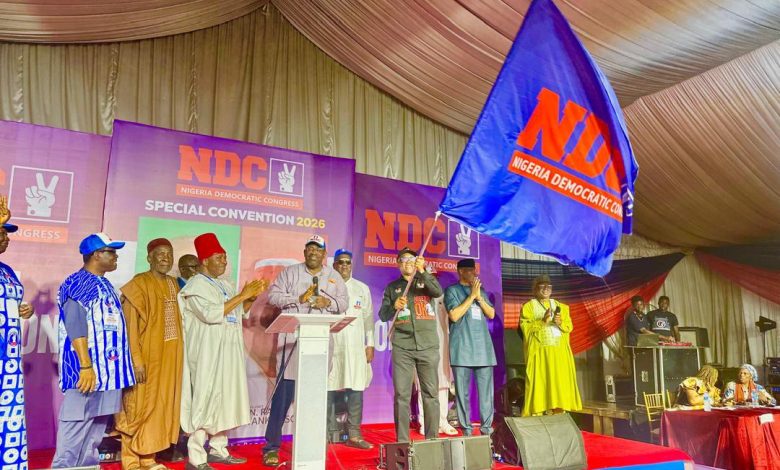
Presidential candidate of the Nigeria Democratic Congress (NDC), Peter Obi, has stated that Nigeria has no justification for being ranked among the world’s hungriest nations despite its vast human and natural resources.
Obi made the remarks while addressing supporters and party members, arguing that Nigeria possesses abundant arable land, a large youthful population, favorable climatic conditions, and significant agricultural potential that should make food security a national strength rather than a persistent challenge.
According to him, the country’s food crisis is not the result of a lack of resources but of poor governance, insecurity, weak agricultural policies, and inadequate investment in production.
The former Anambra State governor stressed that Nigeria should be producing enough food to feed its population and generate export earnings, rather than struggling with rising food prices, malnutrition, and dependence on imports.
Obi argued that improving security in farming communities, investing in modern agriculture, expanding rural infrastructure, and supporting smallholder farmers would significantly boost food production and reduce hunger.
He also linked the issue of hunger to broader economic challenges, including unemployment, inflation, and declining purchasing power, noting that many Nigerians are increasingly unable to afford basic food items.
The comments come amid continuing concerns over food security across several parts of the country, where insecurity, climate-related challenges, high transportation costs, and economic pressures have contributed to rising food prices.
Supporters of Obi praised the remarks, describing them as a call for a more production-driven economy and greater focus on agriculture as a tool for national development.
Critics, however, argued that addressing food insecurity requires long-term structural reforms and coordinated efforts across all levels of government, regardless of which political party is in power.
Food security has emerged as one of the major issues likely to shape political debate ahead of the 2027 general elections, alongside concerns about economic growth, inflation, employment, education, healthcare, and national security.
Political analysts note that with agriculture employing millions of Nigerians directly and indirectly, proposals aimed at reducing hunger and boosting food production are expected to feature prominently in campaign discussions over the coming months.


