

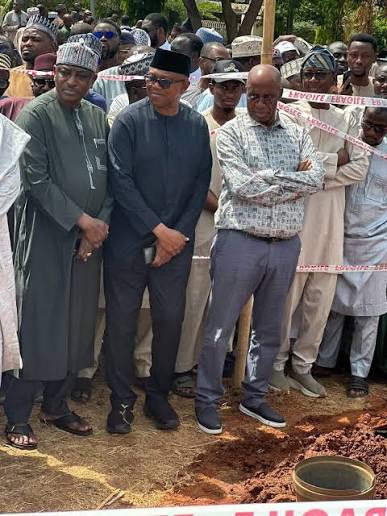
Former Anambra State Governor and National Democratic Coalition (NDC) presidential candidate Peter Obi on Friday paid separate condolence visits to former Rivers State Governor Rotimi Amaechi and businessman Isaac Fayose in Abuja, expressing support for the two men following recent family bereavements.
Obi’s first stop was the residence of Amaechi, whose mother, Mrs. Mary Amaechi, died on July 16 at the age of 89. During the visit, Obi conveyed his heartfelt condolences to the former Minister of Transportation and members of the bereaved family, praying for the peaceful repose of the deceased and strength for the family as they mourn their loss.
The former presidential candidate also visited businessman Isaac Fayose, who has continued to mourn the death of his wife earlier this year. Obi offered words of comfort and encouraged him to remain steadfast during the difficult period.
Speaking after the meetings, Obi emphasized the importance of compassion and human connection, saying leaders must remain empathetic and stand with people during moments of grief. He noted that beyond politics, showing solidarity with those experiencing personal loss is a shared responsibility.
The visit to Fayose also drew attention because of recent public discussions surrounding his political allegiance. Fayose dismissed speculation generated by a viral video showing him alongside Seyi Tinubu, insisting that his support for Obi remains unchanged. He reiterated his commitment to the Obidient movement, describing himself as a loyal supporter despite the controversy.
The condolence visits have generated reactions from political observers and supporters alike. While many praised Obi’s decision to reach out across political and personal divides, others debated the broader political implications of the engagements.
Analysts, however, noted that condolence visits remain a longstanding tradition within Nigeria’s political culture, often bringing together leaders from different political backgrounds during times of bereavement.
Although the visits were centred on offering comfort rather than discussing politics, they reinforced Obi’s message that empathy, dialogue, and mutual respect should remain essential values in public leadership, regardless of political differences or affiliations.


