

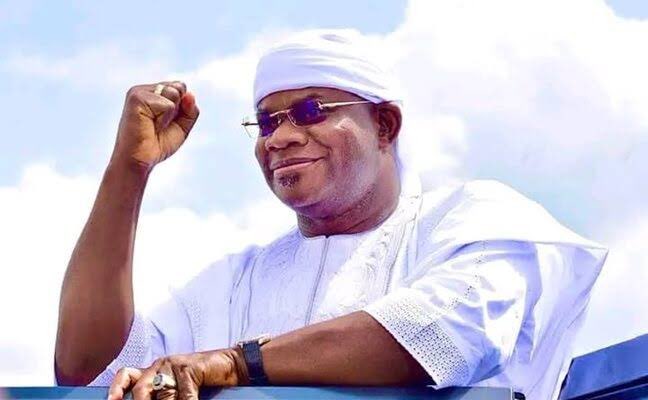
The reported decision by the Independent National Electoral Commission (INEC) to upload former Kogi State Governor, Yahaya Bello, as the All Progressives Congress (APC) senatorial candidate for Kogi Central has reopened an uncomfortable question about the intersection of electoral politics, public accountability and the administration of justice in Nigeria.
The issue is not simply whether Yahaya Bello has the constitutional right to contest an election. It is also about what the nomination says about Nigeria’s commitment to accountability when individuals who have been accused of serious financial misconduct remain active participants in the political process.
Bello has denied wrongdoing and, importantly, allegations are not convictions. The presumption of innocence is a fundamental principle that must not be sacrificed merely because a case has generated enormous public interest. No Nigerian should be declared guilty by political opponents, the media or public opinion before a competent court reaches a final determination.
But the presumption of innocence must not become a convenient shield against legitimate questions about public accountability.
The allegations surrounding the former governor concern the management of public resources during his tenure. Such allegations are serious because public office is a position of trust. When billions of naira belonging to citizens are allegedly involved, Nigerians are entitled to demand answers, transparency and a judicial process that is allowed to run its course without political interference.
This is where INEC’s role becomes particularly important.
The Commission is an electoral management body, not a criminal court. Uploading a candidate’s name should therefore not be interpreted as a declaration that the individual is innocent of every allegation against him. Neither should the presence of criminal proceedings automatically be treated as proof that a candidate is constitutionally disqualified.
INEC must apply the law consistently, transparently and without fear or favour.
The bigger concern is the growing perception among Nigerians that political power can provide an escape route from accountability. If politicians facing serious allegations can simply move from one elective office to another, Nigerians may reasonably begin to question whether elections are being used to renew public trust or to provide political insulation.
That perception is dangerous for democracy.
Political parties equally have a responsibility. The APC, like every other political party, should be asking whether the candidates it presents to Nigerians reflect the highest standards of integrity expected from holders of public office. Winning an election should not be the only consideration in choosing candidates. Character, accountability, competence and respect for the rule of law should matter.
At the same time, opponents of Bello must resist the temptation to turn legal allegations into political verdicts. If there is evidence of wrongdoing, the appropriate arena for establishing criminal liability is the court. Democracy cannot survive if accusations become convictions simply because they are repeated often enough.
The courts, consequently, have an equally important responsibility. Cases involving alleged corruption by former public officials must not be allowed to languish indefinitely. Justice delayed can undermine both the accused and the public interest. If the accused is innocent, he deserves the opportunity to clear his name. If the allegations are proven, Nigerians deserve accountability.
There is therefore a need for Nigerians to separate eligibility to contest an election from proof of innocence. These are not necessarily the same thing.
INEC’s publication of Bello’s name should trigger neither premature condemnation nor automatic absolution. It should instead reinforce the demand for a transparent electoral process and an independent judicial process.
The 2027 elections must not become another contest in which political loyalty overwhelms questions of accountability. Nigerians have the right to examine the records of every candidate, ask difficult questions and make their choices based on credible information.
Ultimately, the question is bigger than Yahaya Bello.
It is about whether Nigeria can build a political culture in which public office is regarded as a responsibility rather than protection; where allegations are investigated without political manipulation; where the innocent can obtain justice without delay; and where those found culpable cannot hide indefinitely behind political influence.
INEC must remain neutral. The courts must remain independent. Political parties must put national interest above electoral calculations. And voters must remain vigilant.
Nigeria’s democracy will be strengthened not merely by conducting elections, but by ensuring that those who seek public power understand that political office does not place anyone above accountability or the law.


