

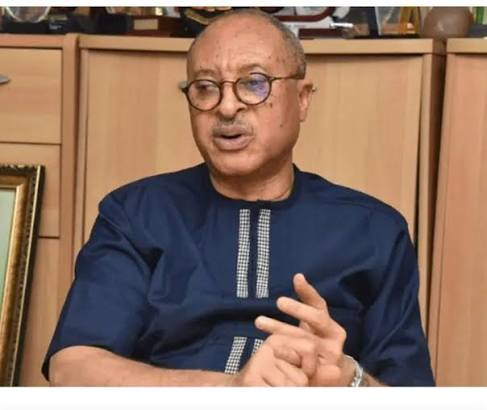
Political economist and university professor, Pat Utomi, has raised concerns over the disparity between the earnings of academics and the huge sums reportedly spent by politicians during party primaries in Nigeria.
Utomi made the remarks in a video shared on his verified X account, where he questioned how university professors could survive on relatively low salaries amid rising living costs. He said some government university professors earn, at best, about N500,000 monthly.
According to Utomi, the situation becomes more concerning when compared with the millions of naira that politicians spend during primary elections. He questioned the source of such funds and the wider implications for Nigeria’s political and economic system.
“How much does a university professor earn in this country?” Utomi asked, before noting that some professors may earn around N500,000 a month.
He also pointed to the broader income challenges facing Nigerians, saying many citizens earn less than N100,000 monthly while the prices of essential goods and services continue to rise.
Utomi’s comments come amid ongoing debates over public-sector remuneration, economic hardship and the cost of political participation in Nigeria. The issue is particularly significant because universities depend on competitive remuneration and working conditions to attract and retain qualified academic staff.
His remarks also draw attention to concerns about the financing of political activities, particularly the high costs associated with party primaries and election campaigns. Such expenditure has long generated debate over political accountability, campaign financing and the influence of money in Nigerian elections.
The contrast highlighted by Utomi comes as political parties and aspirants intensify preparations for the 2027 general elections. The cost of securing party nominations and financing campaigns is expected to remain an important issue in discussions about Nigeria’s electoral system.
Utomi, a professor of political economy and longtime commentator on governance and economic development, has consistently advocated stronger institutions, human-capital development and reforms aimed at improving Nigeria’s economic prospects.


