

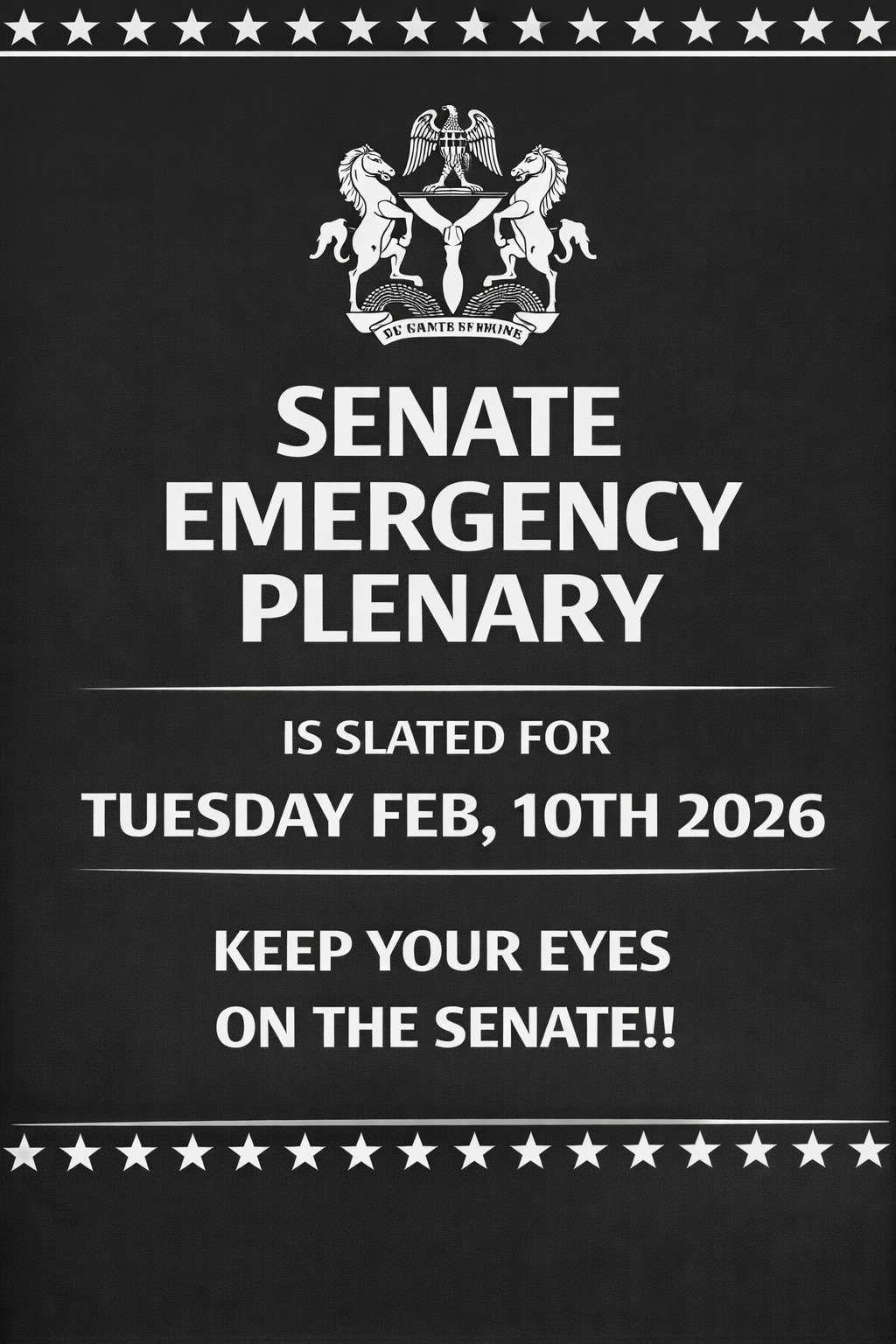
The Nigerian Senate has summoned an emergency plenary session for Tuesday, a move widely interpreted as a panic response to mounting public outrage over its handling of the Electoral Act amendment and the perceived attempt to suffocate electoral transparency. The development follows days of sustained criticism from civil society groups, opposition parties, pro-democracy activists, and concerned citizens across the country.
The backlash was triggered by the Senate’s failure to firmly entrench mandatory electronic transmission of election results, a reform many Nigerians consider non-negotiable after the controversies that marred the 2023 general elections. Critics argue that leaving loopholes in the law creates room for manipulation and further erodes public confidence in future polls, particularly ahead of the 2027 elections.
Public pressure has intensified through protests, public statements, media campaigns, and social media advocacy, with many Nigerians accusing the National Assembly of acting in defiance of the people’s will. The outrage has been amplified by warnings from respected democracy advocates who insist that weakening electoral safeguards at a time of deep economic hardship and rising insecurity is reckless and dangerous.
Political observers say the sudden decision to convene an emergency plenary reflects the gravity of the crisis now confronting the Senate. What lawmakers initially treated as a routine legislative exercise has rapidly transformed into a national credibility test, with accusations that personal and partisan interests are being placed above democratic integrity.
Civil society organisations maintain that the emergency session must produce clear and concrete outcomes, not procedural delays or cosmetic amendments. According to them, anything short of a firm commitment to mandatory electronic transmission of results and stronger electoral safeguards will further inflame public anger and deepen distrust in democratic institutions.
Many activists argue that the Senate now has one last opportunity to redeem itself or face the consequences of ignoring the people. They insist that Nigerians have moved beyond the era of begging the National Assembly to perform its constitutional duty of lawmaking that reflects the will of the electorate. In their view, accountability can no longer be postponed or negotiated away.
A popular expression circulating among protesters captures the prevailing mood: “The man who is already on the ground has no reason to fear falling.” Analysts say this reflects the mindset of a populace pushed to the edge by hardship, exclusion, and repeated democratic disappointments.
As Tuesday’s emergency plenary approaches, all eyes remain fixed on the Senate. The outcome will determine whether lawmakers choose to align with the people and strengthen Nigeria’s democracy—or entrench a path that risks further unrest, voter apathy, and loss of legitimacy.
For a nation still struggling to consolidate democratic gains, the emergency plenary is no longer just a legislative sitting; it is a defining moment that may shape the future of Nigeria’s electoral democracy.


