

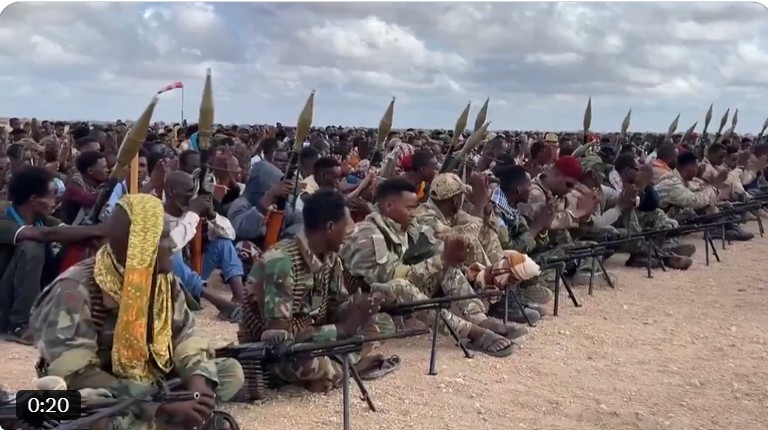
A video clip from February 2021 featuring veteran politician Abdulrahman Kawu Baraje has resurfaced online, reigniting debate over the origins of banditry and insecurity in Nigeria.
In the footage, recorded during celebrations marking his 70th birthday in Kwara State, Baraje appeared to suggest that some non-Nigerian Fulani individuals were brought into the country for electoral purposes and later became involved in violent activities after refusing to leave. The comments have recently gained renewed attention as insecurity remains a major national concern.
However, Baraje subsequently distanced himself from the interpretation of the remarks. In later media appearances, including an interview on television, he maintained that his comments had been misrepresented and taken out of context. He accused critics of using the clip to advance political narratives and smear his reputation.
The resurfaced video has generated strong reactions across social media and political circles. Some commentators argue that the clip raises legitimate questions about cross-border migration, porous borders, and the role of foreign armed groups in Nigeria’s security challenges.
Others caution against drawing sweeping conclusions or assigning collective blame to entire ethnic or social groups, emphasizing that insecurity in Nigeria is driven by a complex combination of factors.
Security researchers and conflict analysts generally point to multiple causes of banditry, including weak governance, rural poverty, competition over land and resources, proliferation of small arms, cattle rustling, climate pressures, and instability across the wider Sahel region.
Some observers have referenced measures adopted in other West African countries, including restrictions on open grazing and enhanced border controls, as possible policy options for addressing aspects of the crisis.
The renewed debate comes at a time when insecurity remains one of Nigeria’s most pressing national challenges. Bandit attacks, kidnappings, and communal violence continue to affect several regions, particularly in the North-West and North-Central zones.
Analysts warn that discussions about the origins of insecurity should be guided by evidence and careful investigation rather than political rhetoric. They argue that lasting solutions require improved intelligence gathering, stronger border management, economic development, effective law enforcement, and regional cooperation among West African states.
While the resurfaced clip has once again sparked controversy, there remains no publicly available evidence supporting claims of organized political sponsorship of banditry by any political party as a whole.
The debate nevertheless highlights the continuing search for answers to a security crisis that has claimed thousands of lives and displaced countless communities across Nigeria.


