

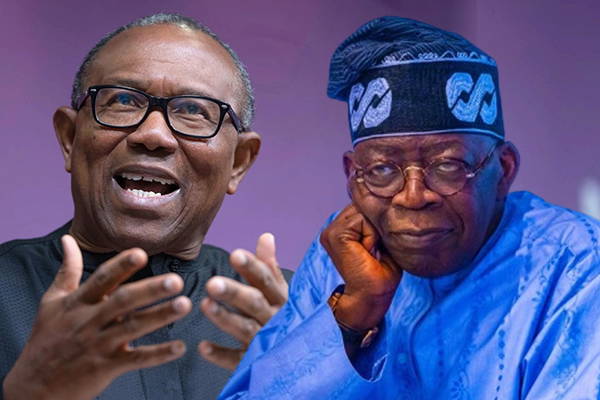
Former Anambra State governor and presidential candidate Peter Obi has expressed concern over Nigeria’s growing debt obligations, warning that the country’s projected $11.6 billion debt servicing bill for 2026 could severely undermine investments in critical social sectors.
Obi’s remarks followed statements attributed to President Bola Tinubu during a recent engagement in Nairobi, where details of Nigeria’s fiscal outlook and borrowing commitments were discussed.
According to Obi, the proposed debt servicing expenditure represents nearly half of the government’s projected revenue for 2026, raising concerns about fiscal sustainability and national development priorities.
He argued that the scale of the debt repayment burden significantly outweighs allocations proposed for essential sectors within the federal government’s ₦68.3 trillion budget framework. Obi noted that projected spending for healthcare stands at ₦2.46 trillion, education at ₦2.56 trillion, and poverty alleviation at ₦865 billion — figures which, combined, remain below the anticipated debt servicing obligations.
The former governor acknowledged that borrowing is not inherently harmful if funds are invested productively. Drawing comparisons with economies such as the United States and Japan, Obi stated that debt can support economic expansion when tied to industrial growth, infrastructure, and productive investments.
However, he argued that Nigeria’s recent borrowing patterns have largely failed to generate sufficient economic returns. According to him, many loans secured since 2023 appear to have been directed more toward recurrent spending and consumption rather than transformative projects capable of stimulating long-term growth and revenue generation.
Obi referenced recent borrowing commitments totaling about $7.8 billion, reportedly earmarked for fiscal support, port modernization, and highway infrastructure. He cautioned that without transparent implementation and measurable economic impact, such loans risk worsening the country’s already mounting financial pressures.
Nigeria’s total public debt has continued to rise sharply in recent years, with reports placing the figure at approximately ₦159.3 trillion. The increase has fueled national debate over debt sustainability, foreign exchange pressures, and the government’s ability to balance development needs with repayment obligations.
Supporters of the current administration maintain that strategic borrowing remains necessary to finance infrastructure, stabilize the economy, and support reforms aimed at long-term economic recovery. Government officials have repeatedly argued that investments in transportation, energy, and public infrastructure are essential for future growth.
Critics, however, warn that escalating debt servicing costs could reduce fiscal space for education, healthcare, social welfare, and poverty reduction programs at a time when millions of Nigerians are already struggling with inflation and economic hardship.
Economic analysts say the debate reflects broader concerns over Nigeria’s fiscal direction and the challenge of sustaining development while managing rising debt obligations in an increasingly fragile global economy.


