

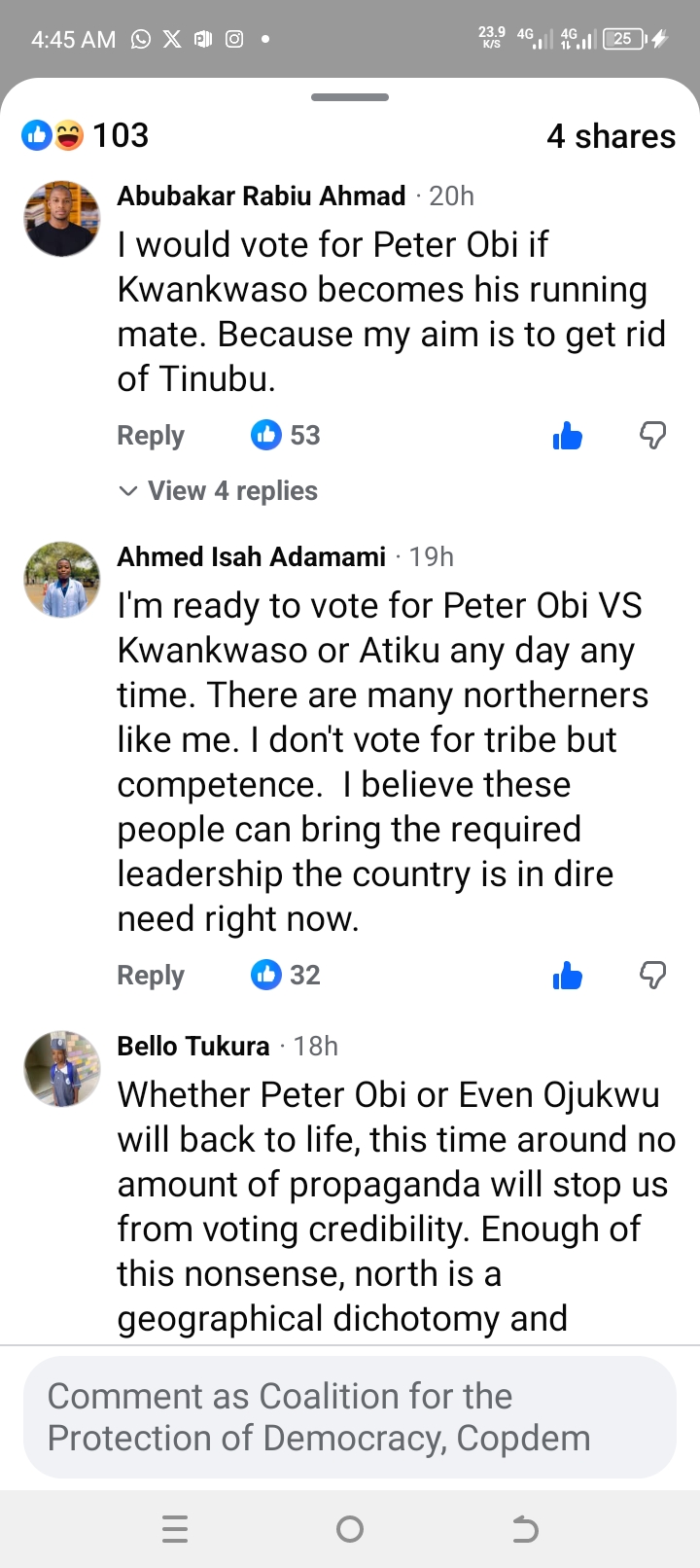
A wave of reactions across social media has highlighted what observers describe as a changing political mood in northern Nigeria, as youths openly challenged a controversial statement dismissing support for Peter Obi ahead of future elections.

The development follows remarks attributed to social media user Sarki (@Waspaping), who claimed that northerners would never vote for Obi under any circumstance. The statement, which circulated widely after being shared on Facebook, triggered significant backlash from northern users who rejected the sweeping generalization.
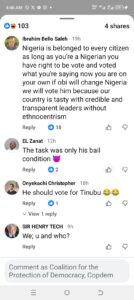
Screenshots attached to the publication reveal numerous responses from young northerners distancing themselves from what they described as divisive and anti-Igbo rhetoric. Many commenters stressed that the region cannot be spoken for as a single political bloc, insisting that voting decisions are increasingly driven by competence, accountability, and national interest rather than ethnicity or regional bias.
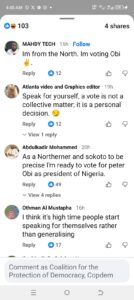
Several respondents also emphasized that political awareness among northern youths is evolving, with growing interest in issue-based leadership and governance outcomes. For these voices, the attempt to portray the North as uniformly opposed to Obi was not only inaccurate but also dismissive of the region’s diversity.
Political observers note that while online sentiment does not automatically translate into electoral outcomes, it often reflects underlying shifts in public opinion. The visible pushback against Sarki’s remarks is being interpreted as an indication of emerging pluralism within northern political conversations, particularly among younger demographics.
As Nigeria edges closer to another election cycle, the incident underscores the increasing role of digital platforms in shaping political narratives and testing public sentiment. It also highlights a broader trend in which regional stereotypes are being contested more openly, signaling a potential reconfiguration of traditional voting alignments.
📌 Key Takeaway: The backlash against anti-Obi rhetoric suggests a growing willingness among northern youths to challenge divisive narratives, pointing to a more dynamic and issue-focused political landscape.


