

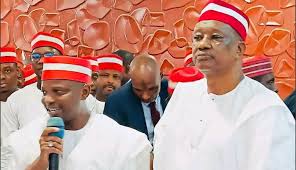
The Nigeria Democratic Congress (NDC) has taken a significant step in its preparations for the 2027 political season by unveiling Mustapha Kwankwaso, son of former Kano State Governor and influential political leader Rabiu Musa Kwankwaso, as a key running mate in Kano State.
The announcement marks one of the most notable political developments involving the newly established party, which was launched in 2026 under the leadership of former Bayelsa State Governor Seriake Dickson. Party officials believe the move could strengthen the NDC’s presence in Kano, one of Nigeria’s most politically important states.
The unveiling was reportedly made public on Monday by a spokesperson associated with the Kwankwasiyya movement, a political structure that has maintained considerable influence in Kano politics for years.
According to party sources, the selection followed consultations among key stakeholders and received the endorsement of Senator Rabiu Musa Kwankwaso, whose political influence continues to shape electoral outcomes across the state.
The decision immediately attracted attention because of Mustapha Kwankwaso’s political background and his connection to one of Northern Nigeria’s most recognizable political figures.
Mustapha previously served as Kano State Commissioner for Youth and Sports before resigning from the position in January. His departure came during a period of political tension involving his father and Governor Abba Kabir Yusuf, a development that fueled speculation about future political realignments within the state.
Political observers view his emergence as part of broader efforts by the NDC to establish a strong foothold in Kano ahead of future elections.
Kano remains one of the country’s most influential political battlegrounds due to its large voter population and strategic importance in national elections. As a result, political parties often invest considerable resources in building alliances and attracting influential figures capable of mobilizing grassroots support.
Supporters of the NDC’s decision argue that Mustapha Kwankwaso brings political experience, youth appeal, and access to an established support network that could prove valuable in future campaigns.
Many members of the Kwankwasiyya movement have welcomed the development, describing it as a strategic move that aligns with efforts to expand the movement’s influence through new political platforms.
They argue that Senator Kwankwaso’s longstanding popularity among many Kano residents remains a major political asset and could help the NDC gain visibility in a highly competitive environment.
However, the announcement has also generated criticism from some political commentators and opponents.
Critics contend that the selection reinforces concerns about political dynasties and the concentration of influence within a small number of families. They argue that political parties should prioritize broader participation and create opportunities for emerging leaders from diverse backgrounds.
Some analysts have suggested that the move could intensify debates about merit, political inheritance, and the role of family connections in Nigeria’s democratic process.
Despite the criticism, supporters maintain that Mustapha’s qualifications and previous experience in public office justify his selection.
Political experts note that family ties have historically played a significant role in politics around the world, but voters ultimately determine whether such candidates succeed at the ballot box.
The emergence of the NDC has already attracted attention as the party seeks to position itself as an alternative platform capable of influencing future elections.
Founded by former Governor Seriake Dickson, the party has been working to attract experienced politicians, youth leaders, and grassroots organizers across different regions of the country.
Observers believe that the inclusion of prominent political figures and their associates reflects the NDC’s strategy of building a broad coalition capable of competing with more established parties.
As preparations for the 2027 political cycle gradually intensify, developments in Kano are expected to remain closely watched by political stakeholders nationwide.
The state’s importance in national politics means that decisions involving influential actors such as Rabiu Musa Kwankwaso and his political allies often have implications beyond Kano itself.
For the NDC, the unveiling of Mustapha Kwankwaso represents both an opportunity and a test. While the move may strengthen support among loyalists of the Kwankwasiyya movement, it also places the party at the center of debates about political succession and representation.
With several years remaining before the next major elections, the political significance of the decision will likely become clearer as alliances evolve and parties continue positioning themselves for future contests.


