

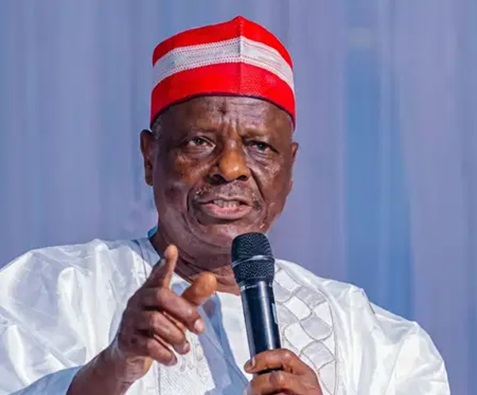
The vice-presidential candidate of the Nigeria Democratic Congress (NDC), Senator Rabiu Musa Kwankwaso, has confirmed that the party’s presidential candidate, Peter Obi, has entered into a written agreement committing to serve only a single four-year term if elected president in the 2027 general election.
Kwankwaso made the disclosure during an appearance on Channels Television’s Politics Today on July 20, where he outlined the political understanding underpinning the NDC’s presidential ticket and expressed confidence that the alliance would provide a formidable challenge to President Bola Ahmed Tinubu in the next election.
According to the former Kano State governor, the agreement consists of two separate arrangements: one entered into within the framework of the NDC and another private understanding designed to strengthen confidence among political stakeholders supporting the alliance.
He explained that the single-term commitment was intended to assure supporters across different parts of the country that power-sharing arrangements agreed upon by the coalition would be respected. Under the arrangement, he said, political power would rotate to Northern Nigeria after Obi’s proposed four-year tenure.
Kwankwaso described the agreement as a demonstration of trust and commitment between the coalition partners, noting that it was designed to avoid the divisions that characterised the 2023 presidential election, when opposition parties contested separately.
He expressed optimism that the NDC alliance would attract widespread national support, claiming that the coalition was already gaining acceptance from traders in Kano markets, political stakeholders in the North and supporters across Southern Nigeria.
According to him, the alliance brings together influential political forces from both the northern and southern regions, creating what he described as a stronger national platform capable of addressing Nigeria’s pressing economic and security challenges.
Addressing the country’s security situation, Kwankwaso said an NDC administration would adopt a comprehensive strategy combining military operations with community-based intelligence gathering and dialogue.
He argued that rebuilding trust between local communities and security agencies would improve intelligence collection and make it easier to identify criminal elements operating in affected areas.
The former governor also suggested that, where appropriate, engaging in dialogue with individuals involved in criminal activities could complement military operations as part of broader efforts to restore peace and stability. He stressed, however, that security forces would continue to play a central role in combating violent crime and protecting lives and property.
Political analysts say the reported one-term agreement, if implemented, would represent a significant power-sharing arrangement aimed at strengthening national unity and fostering confidence among coalition partners. They note that similar political understandings have featured in Nigeria’s democratic history, although their implementation has often generated debate.
Observers also believe the alliance reflects growing efforts by opposition leaders to avoid the fragmentation of votes that many analysts say weakened their chances during the 2023 presidential election.
However, some political commentators caution that any power-sharing arrangement ultimately depends on constitutional processes and the outcome of future elections. They also note that the reported agreement has generated differing opinions among Nigerians, with supporters describing it as a pragmatic compromise while critics question whether such political commitments can be guaranteed over time.
As preparations for the 2027 general election continue, the Obi-Kwankwaso alliance is expected to remain a focal point of Nigeria’s political landscape. The coalition’s strategy of combining regional cooperation, security reforms and economic recovery is likely to feature prominently in the months ahead as parties intensify campaigns to win the confidence of voters across the country.


