

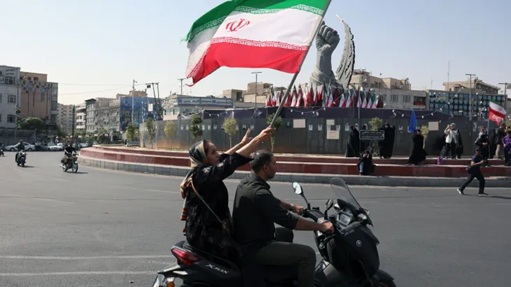
Iran has insisted that it will not abandon its position in the ongoing conflict with the United States and Israel, after US President Donald Trump rejected Tehran’s proposal to reopen the strategically important Strait of Hormuz and resume negotiations.
The latest development has deepened uncertainty over diplomatic efforts aimed at ending the conflict, with Tehran maintaining that a negotiated settlement remains possible while Washington has rejected the conditions attached to Iran’s seven-day roadmap.
Iranian Foreign Minister Abbas Araghchi said on Sunday that Tehran was still awaiting a formal response from the United States through mediators, despite Trump publicly announcing that he had rejected the proposal.
Araghchi said Iran’s conditions for reopening the Strait of Hormuz remained unchanged and insisted that only negotiations could resolve the current deadlock.
The Iranian proposal, presented through Qatar during the United Nations General Assembly in New York, outlined a seven-day process for restoring normal maritime traffic through the Strait of Hormuz and restarting nuclear negotiations with Washington.
Under the proposal, Iran said the initial steps would take several days, with the waterway reopening on the sixth day and US-Iran nuclear discussions resuming on the seventh day.
In return, Tehran demanded a number of measures from Washington, including the lifting of a naval blockade on Iranian ports, the removal of sanctions affecting Iranian oil sales, the release of about $12bn in frozen Iranian assets and a ceasefire covering the wider region, including Lebanon and Yemen.
The Strait of Hormuz has become a central issue in the conflict because of its importance to international energy supplies. Al Jazeera reported that roughly one-fifth of the world’s traded oil and gas passed through the waterway before the war.
Trump, however, rejected the proposal on Saturday while speaking to reporters before leaving Washington. He said the Iranian offer was unacceptable and argued that Tehran was seeking an agreement because of the economic pressure it was facing.
The US president’s rejection came after several days of diplomatic contacts involving Iranian officials, US representatives and mediators from Qatar and Pakistan.
Despite Trump’s public rejection, Araghchi said Tehran had not yet received what it considered a definitive response through the established diplomatic channels.
Iranian President Masoud Pezeshkian also said Tehran no longer trusted negotiations with Washington, citing previous instances in which talks were followed by attacks and sanctions.
Speaking to Al Jazeera, Pezeshkian said Iran remained willing to resolve the crisis through diplomacy but would not accept what he described as negotiations conducted under pressure. He also rejected the assertion that Iran alone was responsible for the closure of the Strait of Hormuz, saying Tehran regarded the restrictions as a response to the cutting of routes to Iran.
The Iranian president further maintained that the waterway could return to normal commercial shipping if an agreement to end the conflict was reached.
The dispute over Hormuz is occurring against the backdrop of a conflict that has entered its seventh month, according to Al Jazeera. Previous diplomatic efforts had also produced a memorandum of understanding in June, but that arrangement subsequently collapsed.
The latest proposal was intended to revive diplomacy and establish a timetable for ending hostilities. However, the opposing positions of Tehran and Washington have left the negotiations facing another major obstacle.
While Iran says its conditions remain clear and that diplomacy is the only route out of the crisis, Trump has publicly rejected Tehran’s latest roadmap. The immediate next step is expected to depend on further communication through mediators and whether both sides can find common ground on the conditions surrounding the Strait of Hormuz, sanctions, the ceasefire and Iran’s nuclear programme.
The continuing standoff has also kept attention focused on the potential consequences for global energy and maritime trade, given the strategic importance of the waterway to international shipping.


