

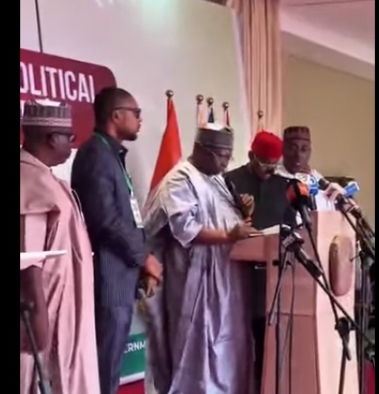
The Ibadan meeting has emerged as one of the most significant opposition gatherings ahead of the 2027 general elections, serving as a major turning point in efforts to unite Nigeria’s fragmented opposition forces under a single political direction.
Held in Ibadan, Oyo State, the closed-door consultation reportedly brought together influential political leaders, strategists, and representatives from major opposition blocs including the Labour Party, PDP, NNPP, ADC, SDP, and other interest groups seeking a common platform to challenge the ruling APC in 2027.
At the center of the discussions was the growing belief that disunity among opposition parties handed victory to the APC in previous elections, particularly in 2023, when votes were split among major contenders such as Peter Obi, Atiku Abubakar, and Rabiu Musa Kwankwaso.
Participants reportedly agreed that repeating the same political fragmentation in 2027 would only strengthen President Bola Ahmed Tinubu and the APC’s chances of retaining power. As a result, the meeting focused heavily on the urgent need to produce one presidential candidate acceptable across regional, religious, and political lines.
Sources disclosed that discussions also covered power-sharing arrangements, vice-presidential balancing, legislative cooperation, and governorship alignments across states to ensure that the coalition would not be limited to the presidential race alone but would function as a full national political structure.
Another major concern raised during the Ibadan talks was the issue of political infiltration and internal sabotage. Some stakeholders reportedly warned against hidden loyalists of the ruling party operating within opposition ranks, stressing the need for trusted leadership and credible coalition management.
There were also strong arguments that any coalition arrangement must be built on justice, transparency, and grassroots acceptance rather than elite imposition, as many party loyalists remain sensitive to backdoor political deals.
The meeting further explored which political platform would serve as the most acceptable vehicle for the coalition, with parties like ADC, SDP, and Labour Party reportedly discussed as possible neutral grounds capable of accommodating all interests without deep internal resistance.
Supporters of the coalition believe the Ibadan meeting succeeded in laying the foundation for a historic alliance by securing broad agreement that personal ambition must give way to national interest.
Though no final candidate was announced, the outcome of the meeting reportedly produced a strong consensus: opposition parties must field one presidential candidate in 2027 if they hope to defeat the APC and reshape Nigeria’s political future.
Political observers now see the Ibadan talks as the beginning of what could become the most formidable opposition coalition since the formation of the APC itself before the 2015 general elections.


