

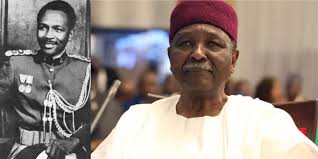
The Nigerian Civil War, also known as the Biafran War (1967–1970), remains one of the most defining and painful chapters in the history of Nigeria. In various post-war reflections and interviews, former Head of State Yakubu Gowon has shared striking accounts about key decisions taken during and after the conflict. Among the most discussed narratives are the alleged intervention of Chief Obafemi Awolowo in saving the life of General Murtala Muhammed, and Gowon’s personal decision to spare Colonel Chukwuemeka Odumegwu Ojukwu from execution after the war.
These accounts continue to shape public understanding of reconciliation, leadership, and justice in post-war Nigeria.
The Nigerian Civil War Context
The Nigerian Civil War erupted after political tensions, ethnic divisions, and military coups destabilized the young nation. Following the attempted secession of the Eastern Region under the leadership of Chukwuemeka Odumegwu Ojukwu, the federal government under Gowon launched a military campaign to preserve national unity.
The war lasted nearly three years and resulted in massive loss of life, displacement, and widespread humanitarian crises. By January 1970, the conflict ended with the surrender of Biafran forces.
Gowon and Post-War Decisio
In post-war Nigeria, one of the most debated aspects of Gowon’s leadership was his policy of “no victor, no vanquished,” which aimed to promote reconciliation rather than revenge. According to Gowon’s reflections, this philosophy guided his decisions on how to treat former adversaries after the war ended.
A central figure in these decisions was Ojukwu, the Biafran leader who had fled into exile in Ivory Coast after the collapse of Biafra. Many expected severe punishment if he were captured or returned to Nigeria.
However, Gowon stated that he chose not to pursue vengeance. Instead, he allowed Ojukwu to remain in exile for several years before he was eventually granted a political pardon and reintegrated into Nigerian society. This decision has since been viewed as a major step toward national healing.
Why Gowon Spared Ojukwu
Gowon has repeatedly emphasized that sparing Ojukwu was a deliberate act to prevent further national division. Executing or harshly punishing him, he argued, would have reopened old wounds and possibly triggered renewed instability.
The former Head of State maintained that after the war, Nigeria needed unity, not continued retaliation. His decision to extend clemency to Ojukwu is often cited as a cornerstone of Nigeria’s post-war reconciliation strategy.
While critics have debated whether justice was fully served, supporters argue that Gowon’s restraint helped stabilize the country during a fragile period.
The Awolowo–Murtala Controversy
Another widely discussed account from the civil war era involves Obafemi Awolowo and his alleged role in saving the life of Murtala Muhammed.
Murtala Muhammed, who later became Nigeria’s Head of State in 1975, was a prominent military commander during the war. According to narratives attributed to Gowon and other historical recollections, Murtala was once at risk of severe disciplinary action or execution due to internal military tensions and wartime decisions.
It is in this context that Awolowo, who served as Federal Commissioner for Finance and Vice Chairman of the Federal Executive Council during the war, is said to have intervened diplomatically. His influence within the federal government and his reputation as a stabilizing civilian leader reportedly helped de-escalate tensions surrounding Murtala’s fate.
While details vary across accounts, the story underscores Awolowo’s perceived role as a moderating voice in a highly volatile wartime government structure.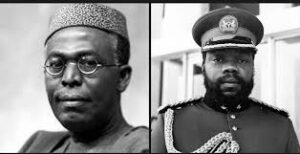
Leadership, Loyalty, and Survival in Wartime Nigeria
The intertwined stories of Gowon, Awolowo, Murtala Muhammed, and Ojukwu highlight the complexity of leadership during the Nigerian Civil War. Decisions were often made under extreme pressure, with national survival at stake.
Gowon’s leadership style emphasized restraint and reconciliation, while Awolowo’s involvement in economic stabilization and governance added a civilian balancing force to military authority. Meanwhile, Murtala’s survival and later rise to power became symbolic of the unpredictable trajectories of military leaders in post-war Nigeria.
Ojukwu’s exile and eventual return further illustrate the long journey toward political reintegration and forgiveness.
Historical Debate and Public Memory
Historians continue to debate the accuracy and extent of some of these accounts, particularly informal claims surrounding individual interventions and “life-saving” decisions. Much of the narrative is drawn from memoirs, interviews, and oral history rather than official wartime documentation.
However, what remains undisputed is that the post-war choices made by Gowon’s administration significantly shaped Nigeria’s political evolution.
The “no victor, no vanquished” policy remains a reference point in discussions about conflict resolution in Africa.
Legacy of the Civil War Decisions
Today, the legacies of these figures remain deeply embedded in Nigerian political history. Gowon is often remembered for reconciliation efforts; Ojukwu for his leadership of the Biafran cause; Awolowo for his economic and political influence; and Murtala Muhammed for his later transformative but brief leadership as Head of State.
Together, their stories reflect the fragile balance between war and peace, punishment and forgiveness, division and unity.
The Nigerian Civil War may have ended decades ago, but the decisions made during and after it continue to shape national identity and historical interpretation in Nigeria.


